
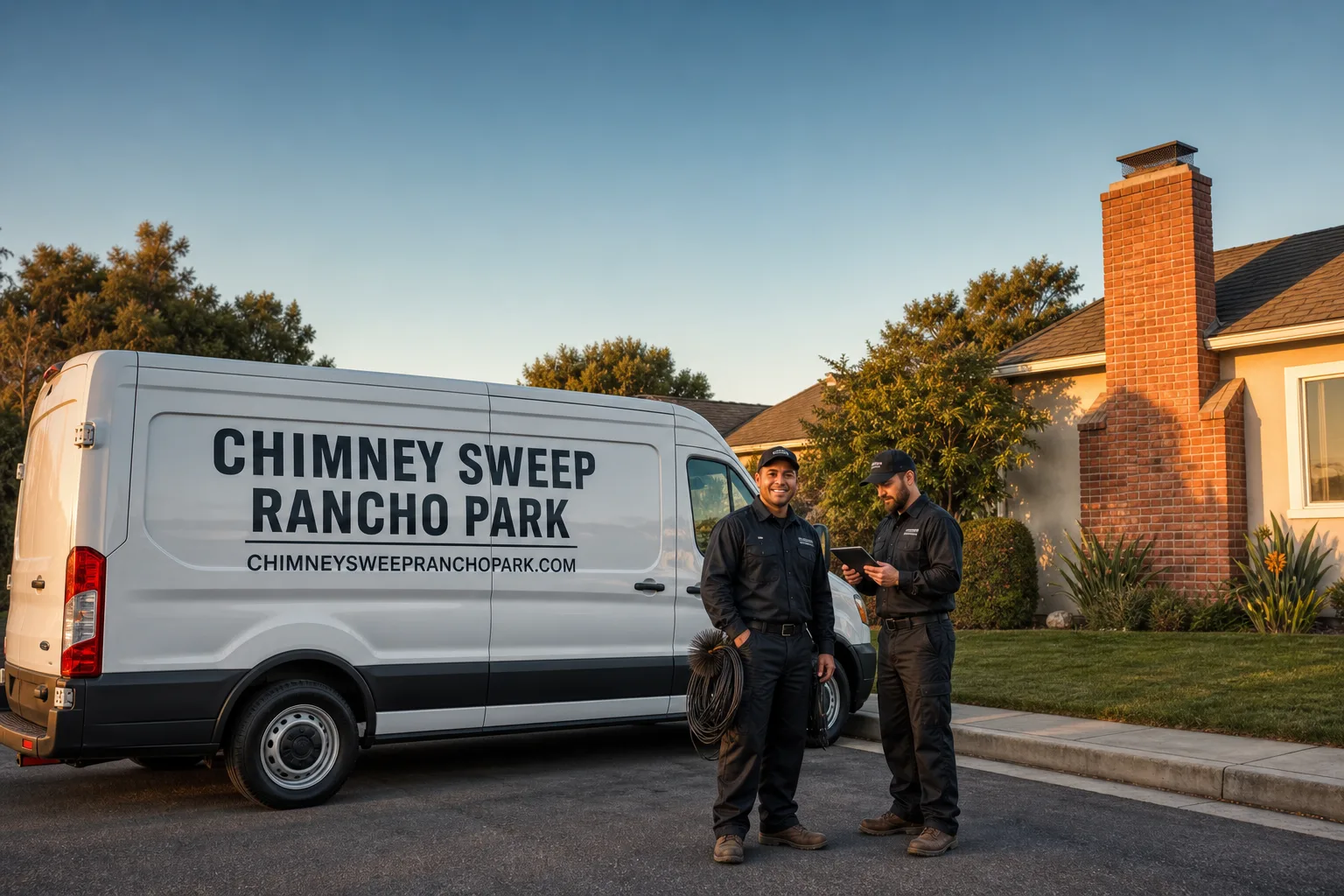
Fast, Reliable Dryer Vent Cleaning Across Culver City
Dryer vent cleaning in Culver City typically costs between $145 and $310 for a standard single-family home, and most jobs are completed in 45 to 90 minutes. We serve every Culver City zip code: 90230, 90231, 90232, and 90233. Call (877) 326-6276 for a free estimate from Alvin Abbott and our team.
Culver City’s housing stock presents a problem most vent cleaning guides never address. In the dense 1920s to 1950s bungalow blocks around Carlson Park, Veterans Park, and McManus, dryer vents frequently terminate in shared or adjacent wall cavities with neighboring flues. Lint can migrate into a neighbor’s chimney chase and create a hidden fire risk that simply doesn’t exist in detached suburban homes. We know these blocks block by block. We know where the shared stacks are, where the original stucco hides crushed ductwork, and where a 90-year-old chimney chase was never designed for a modern dryer’s exhaust volume. That’s the difference between a standard cleaning and one that actually finds the problem.
Why Chimney Sweep Rancho Park Is Culver City’s Preferred Dryer Vent Cleaning Company
Our Dryer Vent Cleaning work in Culver City has taught us that attached properties on streets like Braddock Drive and Higuera Street don’t behave like standalone houses. When a 1950s bungalow’s dryer exhausts into a shared chase with a neighbor’s fireplace flue, the lint doesn’t just clog the dryer duct. It settles behind dampers, blocks drafts, and creates a fire load nobody can see until a camera goes in. We bring that camera on every call.
Alvin Abbott started this company with a simple rule: if we can’t show you the problem, you don’t have to believe it exists. That rule matters more in Culver City than almost anywhere we work. The shared chases, the original masonry, the capped decorative chimneys in the older blocks near downtown: none of these problems are visible from the outside. We document everything with photo and video evidence before recommending any work. No scare-sell. No “trust us” claims. Just footage.
We also stock the right parts before we arrive. That means Gelco termination caps, backdraft dampers, and vent components that actually fit 1920s-era wall cavities and 21st-century dryers alike. Most generalist handymen carry one universal cap that fits nothing well. We don’t work that way.
Our Dryer Vent Cleaning Services in Culver City
Full Dryer Duct Cleaning
A standard dryer duct cleaning in Culver City covers the entire run from the dryer connection to the exterior termination. In the older bungalow blocks, that run is often longer than it should be, with elbows hidden behind original stucco and plaster. We pull the full length of the duct, clean it mechanically, and document the before and after with camera footage. Most Culver City homes need this every 12 to 18 months, though shared-wall properties with long horizontal runs may need it yearly.
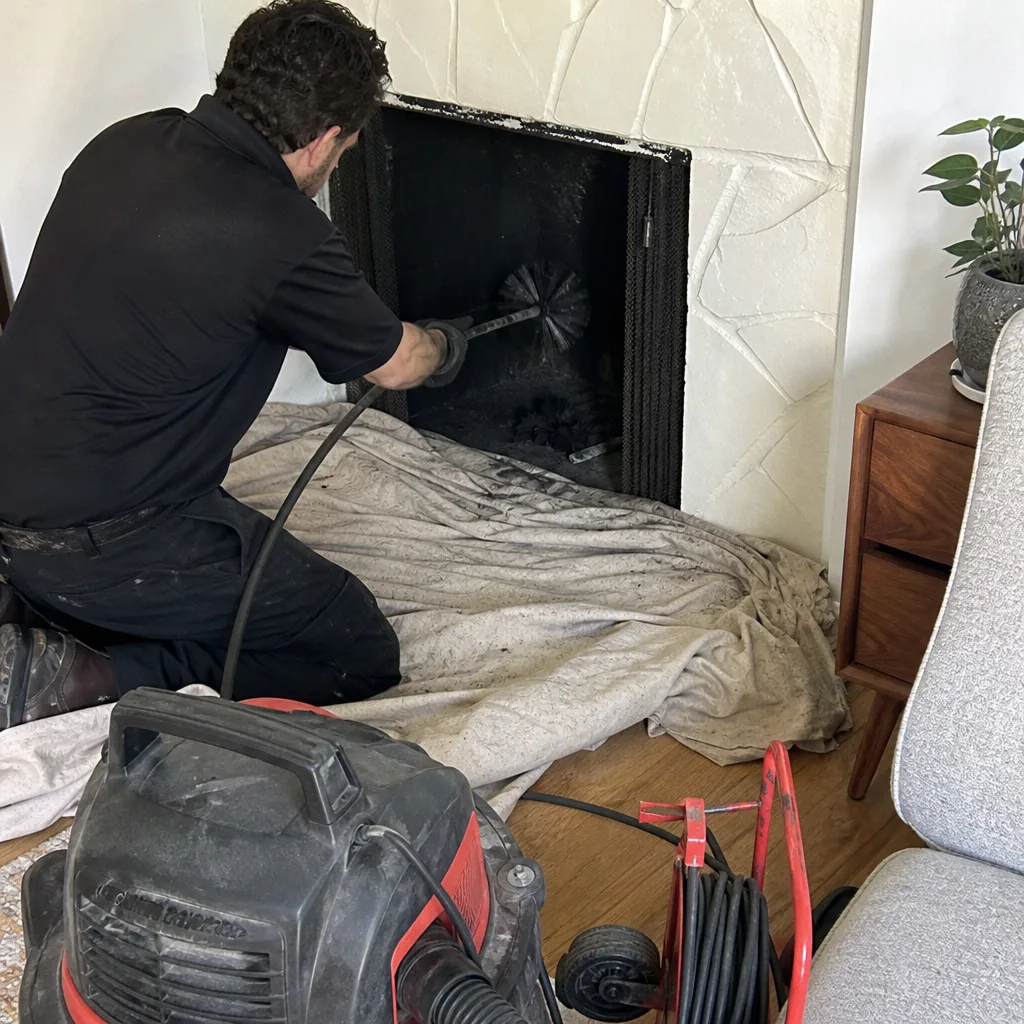
Dryer Vent Camera Inspection
In Culver City’s attached housing, you can’t clean what you can’t see. Our camera inspections are included with every cleaning, and they’re how we’ve found the cross-contamination problems that define this city’s vent work. We inspect the entire duct run, the termination point, and when needed, the adjacent chimney chase to confirm whether lint is migrating where it shouldn’t. If your vent is compromised, you’ll see it on the screen before we recommend any repair.
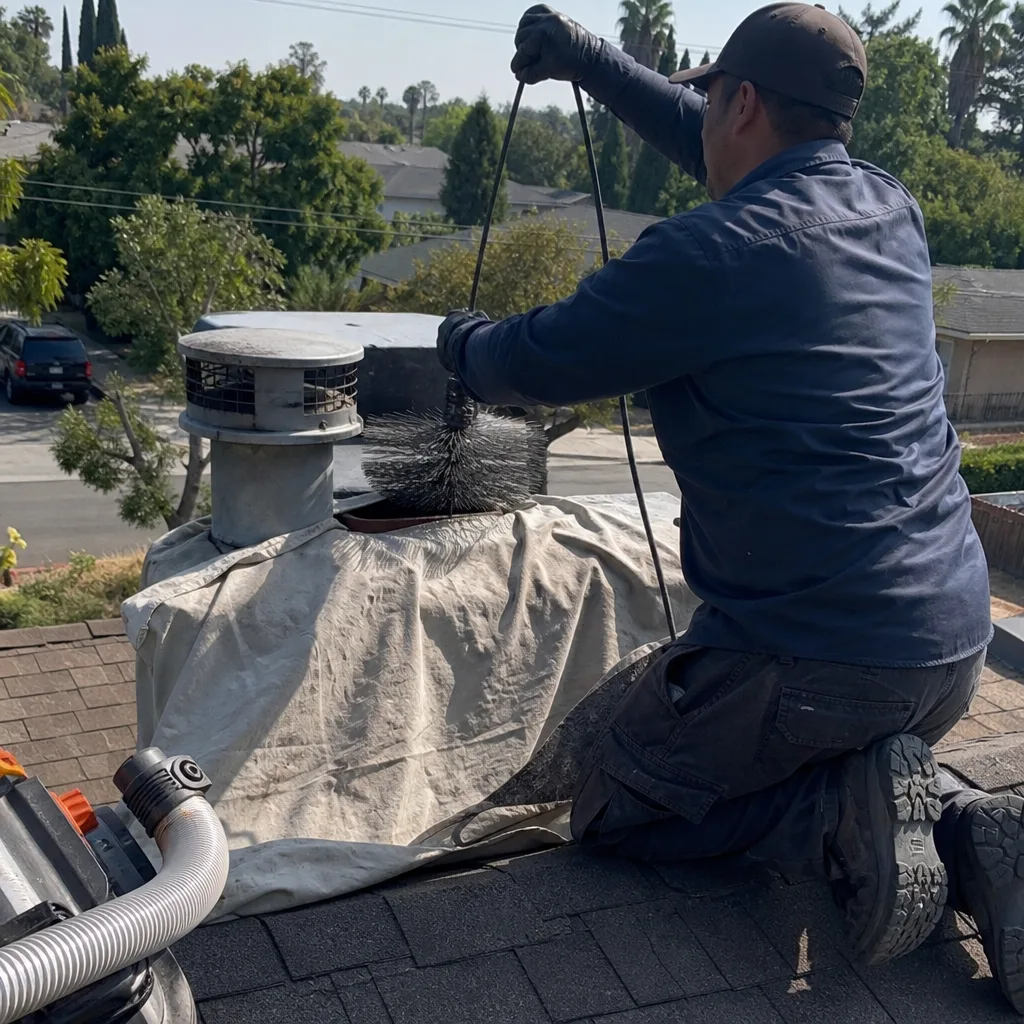
Dryer Vent Termination and Cap Replacement
Many Culver City vents still terminate with original caps that are rusted, missing flappers, or improperly sized for modern dryers. We replace terminations with Gelco components selected for the specific wall type and exposure. In dense bungalow blocks with shared walls, a proper backdraft damper is not optional. It’s the difference between your dryer exhausting outside and your neighbor’s fireplace draft pulling your lint back into the shared chase.
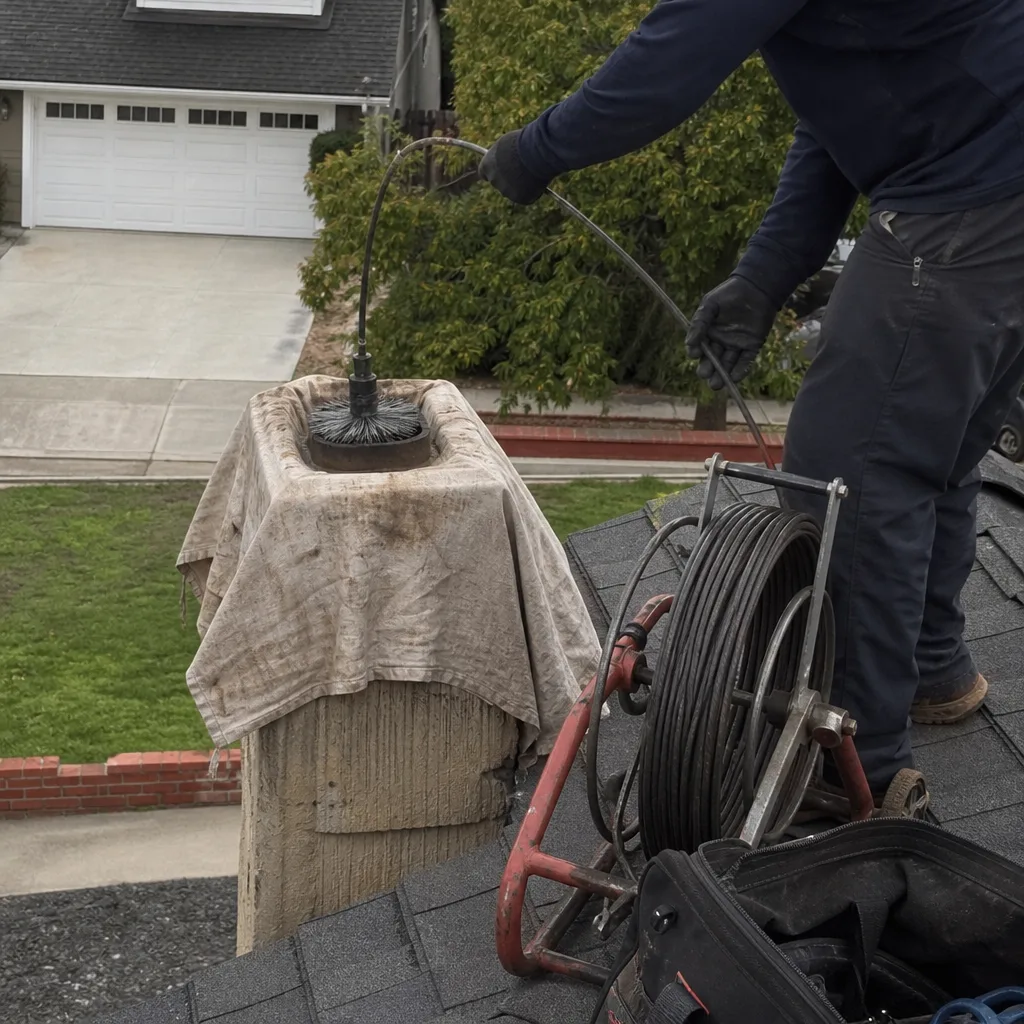
Shared Chase and Cross-Contamination Correction
This is the service that doesn’t exist on most competitors’ price lists, and it’s the one Culver City homeowners need most. We identify where dryer vents and chimney flues share a wall cavity or chase, clean both systems, and install separation components to prevent recurrence. On a call in the Carlson Park neighborhood, we found a 1950s bungalow’s dryer venting into a shared chimney chase with the neighbor’s fireplace flue. Lint had built up behind the damper and was blocking the neighbor’s draft. We used a DuraFlex liner camera to confirm the cross-contamination, then cleared the lint and installed a proper backdraft damper to separate the systems. That’s not a routine cleaning. That’s what actually fixed the problem.
Trusted Brands We Service in Culver City
We work with Olympia Chimney and Copperfield components because they’re built for the specific stresses of older Southern California construction. Olympia parts include the termination caps and dampers commonly needed on Culver City’s original masonry chimneys, and Copperfield’s venting components hold up to the salt air and sun exposure that breaks down cheaper galvanized parts within a few years. We also stock Famco venting products for dryer exhaust applications. When we install a part in Culver City, it’s selected for that specific home, not pulled from whatever the local hardware store had on the shelf last Tuesday.
Common Dryer Vent Cleaning Problems We See in Culver City Homes
- Lint migration into shared chimney chases. In attached bungalows and duplexes, dryer exhaust and fireplace flues often share the same wall cavity. Lint that should exit the exterior vent instead settles behind a neighbor’s damper, creating a fire hazard and blocking their draft during the few weeks a year when AQMD allows burning.
- Crushed or disconnected ductwork behind original stucco. The 1920s to 1950s homes across Culver City were built with plaster and stucco over framing that leaves duct runs impossible to access without opening walls. A vent that looks fine at both ends can be crushed in the middle. Camera inspection finds it.
- Missing or failed backdraft dampers. Most original Culver City dryer vents never had a proper backdraft damper. When the dryer cycles off, air movement in the shared wall cavity pulls lint and combustion gases back toward the appliance. This is a code issue most homeowners don’t know exists.
- Lint accumulation at the chimney termination point. When a dryer vent terminates near a chimney cap or crown, lint builds up on those surfaces. During AQMD no-burn days, residents are more aware of their chimneys, and a lint-loaded crown is a fire hazard waiting for the first legal burn night.
Pricing for Dryer Vent Cleaning in Culver City, CA
A standard dryer vent cleaning in Culver City runs $145 to $310. Single-story detached homes typically fall in the $145 to $195 range. Two-story homes or longer vent runs run $195 to $250. Shared-wall properties, attached bungalows, or jobs that require cross-contamination correction run $250 to $310, because the work involves inspecting and cleaning the adjacent chase in addition to the dryer duct. If a camera inspection reveals crushed ductwork or a failed damper, we’ll quote any repair separately before doing the work. Call (877) 326-6276 for a flat-price quote before we book. Estimates are free.
We Also Serve Cities Near Culver City
Our service area covers Culver City and the surrounding Westside neighborhoods. We routinely work in Cheviot Hills, Palms, Mar Vista, and Rancho Park. If you’re just outside the Culver City line, call (877) 326-6276 and we’ll confirm coverage for your street.
Serving Culver City, CA – Our Local Coverage Area
We’re based in the Culver City area and know this community well. Use the map below to see our service coverage – if you’re nearby, we can almost certainly help.
FAQs – Dryer Vent Cleaning in Culver City
The only way to know for sure is with a camera inspection of both your vent and the adjacent wall cavity. Shared chases are most common in the attached bungalows and duplexes built between 1920 and 1950 around neighborhoods like Carlson Park, McManus, and Veterans Park. If your home shares a wall with a neighbor and both properties have original masonry chimneys, there’s a real chance the flues and vents are in the same chase. We confirm this on the first visit, not after a fire. Call (877) 326-6276 to schedule an inspection.
Light use doesn’t mean low risk. Culver City’s mild coastal climate makes creosote buildup minimal in fireplaces, but dryer lint still accumulates in the long, hidden duct runs common in older bungalows. More importantly, in shared-wall properties, lint from your dryer can migrate into a neighbor’s flue even with light use. The fire risk isn’t from how much you dry. It’s from where the lint ends up. Residents who dry a load twice a week still load a compromised chase with enough lint to be a problem after a year or two.
Yes. When your dryer vent and a neighbor’s chimney flue share a chase, excess lint behind the damper can restrict the flue’s draft. The neighbor’s fireplace may smoke, draft poorly, or pull combustion gases back into their living space. In a shared-wall Culver City bungalow, your clogged vent can be their chimney problem. We fix both sides of that equation.
We stock and install Famco, Gelco, Olympia Chimney, and Copperfield components. Famco and Gelco make the termination caps and dampers that fit properly in original wall cavities. Olympia and Copperfield are our go-to brands for chimney and venting parts on Culver City’s older masonry systems. When a part is recommended, it’s specified for the application, not generic.
Most Culver City homes should schedule dryer vent cleaning every 12 to 18 months. Homes with shared chases, long horizontal vent runs, or dryers that run daily should schedule annually. If you’ve never had a camera inspection of your vent system and your home is older than 1970, schedule one now. The first visit establishes your baseline. Call (877) 326-6276 for a free estimate and a flat-price quote.
Written by Alvin Abbott, Owner at Chimney Sweep Rancho Park, serving Culver City and Rancho Park with chimney and dryer vent services since 2011.