
Last updated November 2, 2026
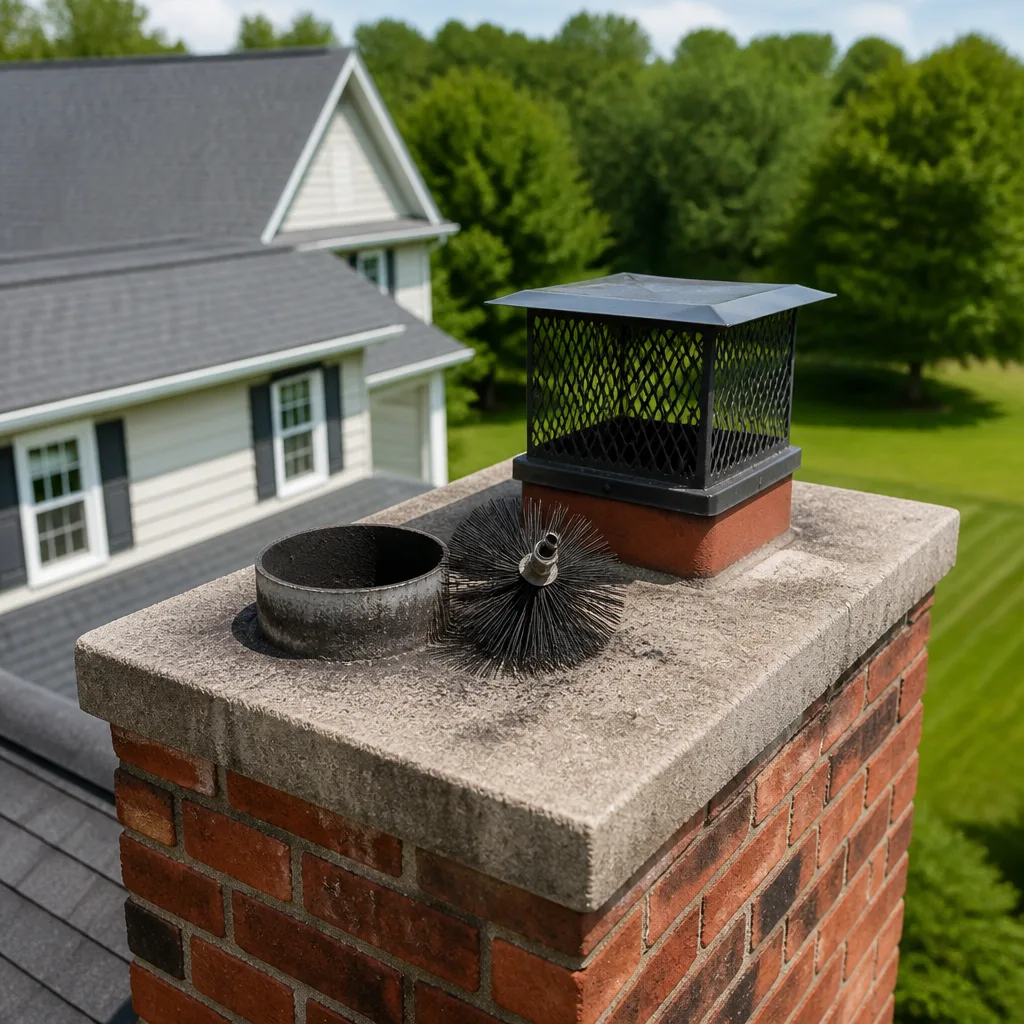 Sweep & inspection
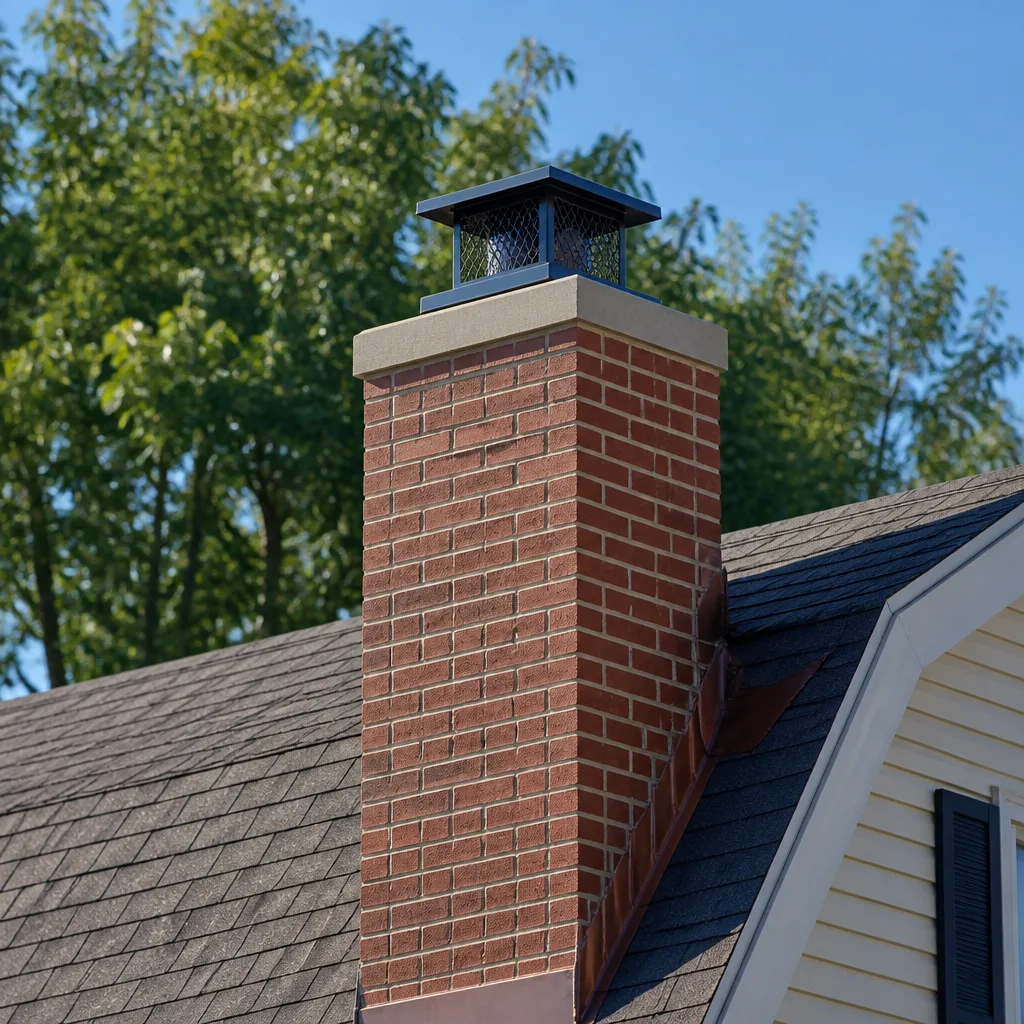 Caps & crowns
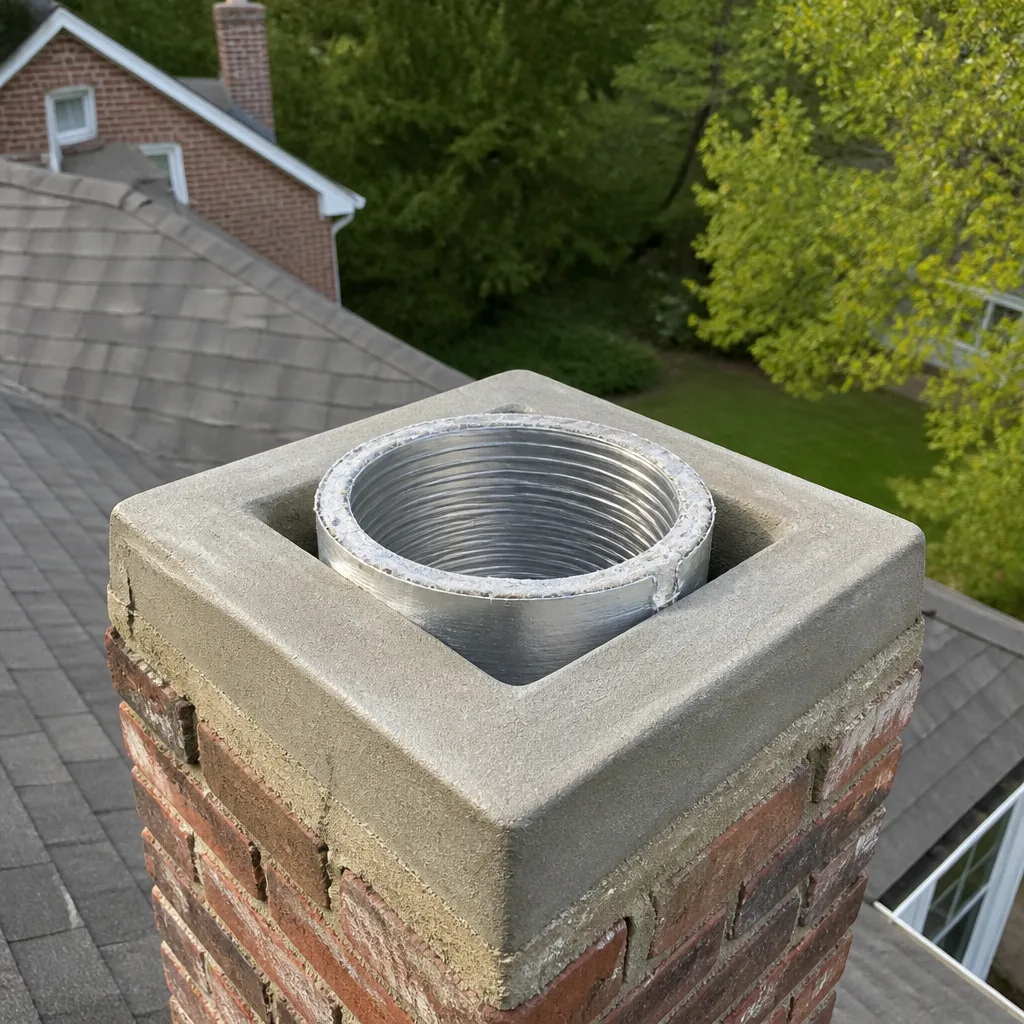 Flue relining
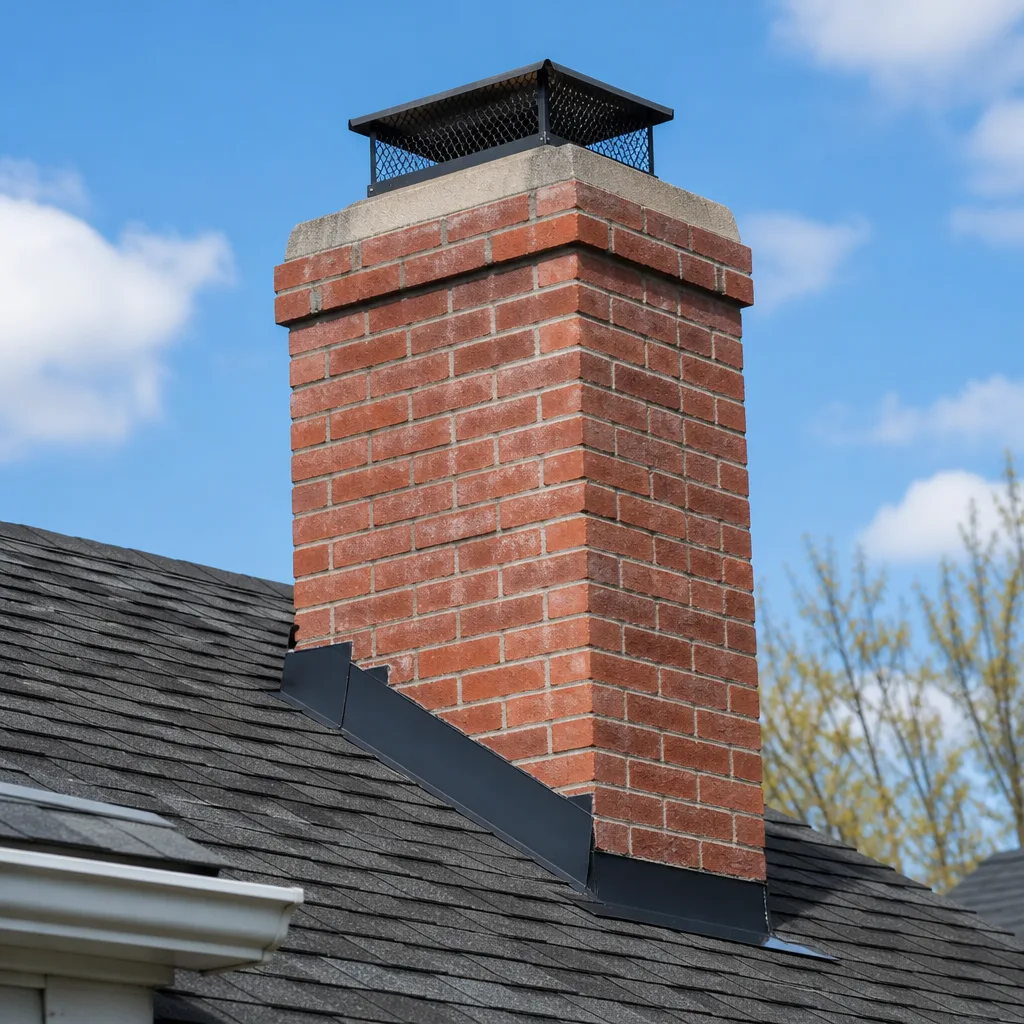 Masonry repair
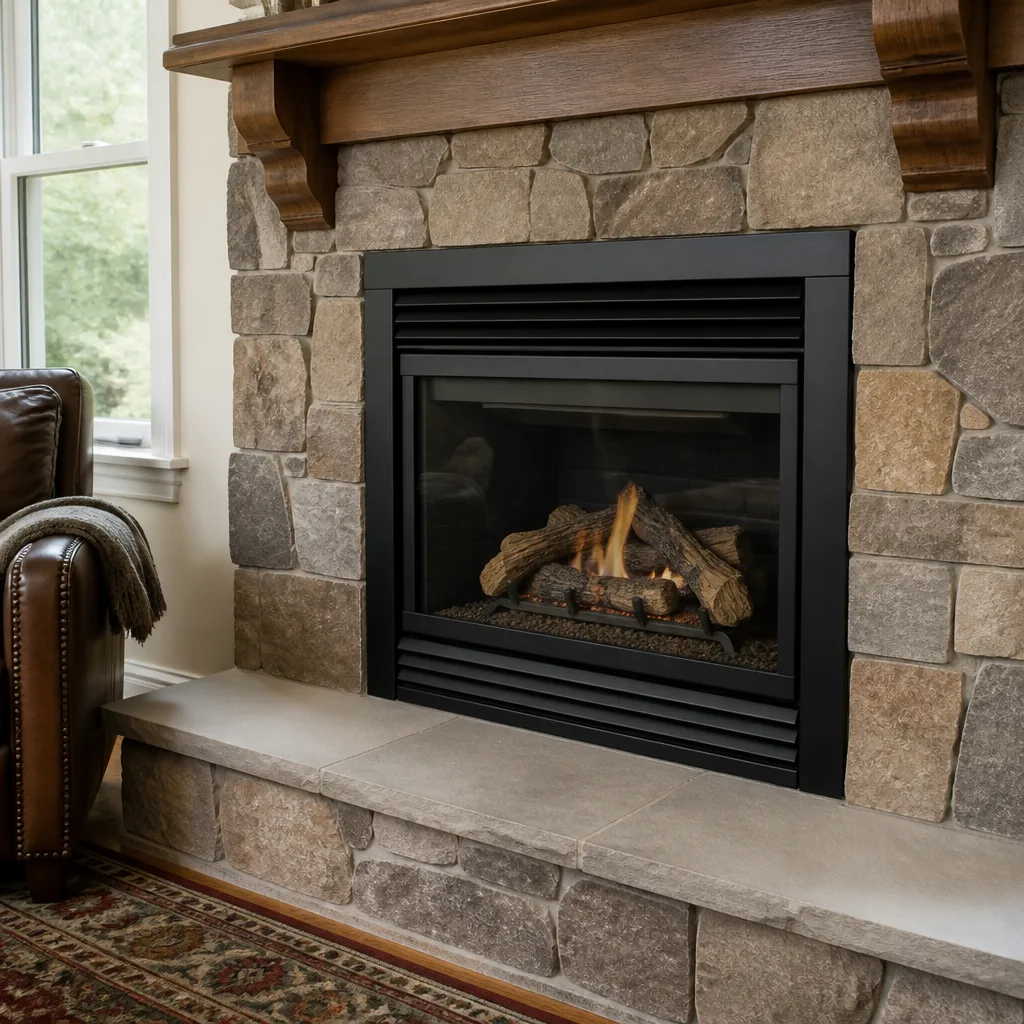 Gas fireplace service
Level 1 sweep and inspection to the NFPA 211 annual standard - flue, crown, cap, and flashing checked and photographed
Chimney sweep logs do not sweep chimneys. They loosen some creosote - which then falls where a brush and vacuum still have to collect it.
Chimney Cleaning Warning Signs: A Rancho Park Homeowner’s Reference Guide
Here’s a number most Rancho Park homeowners don’t know: the National Fire Protection Association reports that roughly one in four home heating fires involves a chimney or flue. What makes that statistic frustrating is how preventable most of those fires are. The warning signs are there, but they get ignored because nobody explains what they actually mean. This guide maps the symptoms you can see, smell, and hear to the specific problems causing them, so when you call a sweep in Rancho Park, you can describe exactly what’s happening instead of saying “something seems wrong.”
Quick Answer
The most common chimney warning signs in Rancho Park homes are white staining on exterior masonry (water intrusion), black staining around the firebox opening (smoke rollout from draft failure), a creosote odor that intensifies on warm days (liner damage or heavy buildup), and unusual sounds like scratching or flapping (animal presence). Any of these symptoms means the system needs professional evaluation before the next burn. For a complete breakdown of what to look for and when to schedule service, see our Chimney Sweep Maintenance Checklist for Rancho Park Homeowners. A clean flue isn’t a luxury, it’s how your system is supposed to work.
Styles & brands we work with
- Sweep & inspection
- Caps & crowns
- Flue relining
- Masonry repair
- Gas fireplace service
Table of Contents
- Reading the Stains: White, Black, and Brown All Mean Different Things
- Draft Failure: Three Causes, Three Different Fixes
- Creosote Odor on Hot Days: What It Reveals About Your Liner
- Sounds to Listen For: Animals, Expansion, and Structural Cracking
- The Firebox Flashlight Check: Five Things to Look For
- Moisture Warning Signs Specific to Rancho Park’s Climate
- Gas Fireplace Warning Signs That Get Overlooked
- The Dryer Vent Connection: Why We Treat Them Together
Reading the Stains: White, Black, and Brown All Mean Different Things
Masonry staining is the most common warning sign homeowners notice, but here’s what most guides won’t tell you: the color tells you the source. In Rancho Park, where we see chimneys built across five decades of construction styles, the pattern repeats often enough that we can usually identify the problem from a photo before we arrive.
White staining (efflorescence)
White, chalky residue on brick or stone is efflorescence, and it’s water, not smoke. When moisture moves through masonry, it dissolves naturally occurring salts in the brick and mortar. As the water evaporates on the surface, the salts crystallize into that white film. Efflorescence itself isn’t structurally dangerous, but it means water is getting into places it shouldn’t. In a Rancho Park chimney, common sources include a cracked crown, failed flashing at the roofline, or porous brick that has never been sealed. If you wipe efflorescence away and it returns within a few months, active water intrusion is ongoing.
Black staining around the firebox opening
Black streaks or soot staining above the fireplace opening, on the mantel, or on the surrounding wall indicate smoke rollout. Smoke rising from the fire is supposed to enter the flue and exit the roof. When it doesn’t, it spills into the room, depositing soot on surfaces. The cause is almost always a draft problem, which we break down in detail below. What matters here: black staining inside the living space is never cosmetic. It means combustion byproducts, including carbon monoxide in gas systems, are not fully venting.
Brown staining on interior walls or ceiling
Brown stains near the chimney chase or on the ceiling around the chimney are water intrusion, often with dissolved wood tannins from framing or sheathing. This is more serious than efflorescence because it means water has traveled far enough into the structure to pull color from building materials. In Rancho Park homes with wood-framed chimney chases, this often signals flashing failure at the point where the chimney penetrates the roof deck. Left unaddressed, brown staining progresses to rot, and the repair scope expands well beyond the chimney itself.
The takeaway: before you call a sweep, note the color, location, and when you first saw it. That information alone cuts diagnostic time significantly. For homeowners who want a professional read, our Chimney Repair in Rancho Park page covers what a structural inspection includes.
Draft Failure: Three Causes, Three Different Fixes
Draft failure is the most misunderstood chimney problem in Rancho Park. Homeowners notice smoke lingering in the firebox, heavy air in the room after lighting a fire, or a fireplace that’s difficult to light at all. What they don’t know is that “poor draft” is a symptom with three distinct root causes, each requiring a completely different solution. Our Chimney Sweep Troubleshooting: Common Problems and How to Fix Them explains how to identify which cause applies to your system. Getting this wrong means paying for a fix that doesn’t work.
Chimney height issues. A chimney needs to extend high enough above the roofline to create adequate draw. The general rule is the flue opening should sit at least 2 feet above any structure within 10 feet. In Rancho Park, we see homes where a second-story addition or new neighbor construction changed wind patterns around the chimney. A chimney that drafted fine for 20 years can suddenly struggle because surrounding structures now redirect wind across the flue cap. The fix is typically extending the flue height or installing a properly designed cap. Both are component-level solutions, not full rebuilds.
Damper problems. A damper that doesn’t open fully, a damper that has warped from heat cycling, or one that’s been replaced with the wrong size restricts airflow below the flue. The result is smoke that enters the firebox and stalls instead of rising. This is the first thing we check when smoke rollout is reported, because it’s the most common and the least expensive to address. Replacing a damper with a correctly sized component is straightforward for any competent sweep, but it requires knowing the actual flue dimensions, which is why guesswork from a generalist handyman often recreates the problem.
House pressure problems. Negative air pressure inside a Rancho Park home can defeat even a well-designed chimney. This is common in newer construction built tighter for energy efficiency, and in kitchens where a powerful range hood runs during a fire. The house essentially pulls air down the chimney instead of allowing it to rise. The diagnostic clue: the fireplace drafts fine with a window cracked open, but smokes when windows are closed. Fixing this often involves installing a makeup air system or adjusting the interaction between the chimney and exhaust appliances. It’s an airflow management issue as much as a chimney issue, and it’s why we treat venting as a system, not a single component.
Creosote Odor on Hot Days: What It Reveals About Your Liner
Rancho Park gets hot. Really hot. And when temperatures climb into the 90s, something happens inside chimneys that doesn’t happen in cooler climates: the creosote and soot deposits on flue walls heat up and off-gas. The result is a distinctive odor that homeowners describe as barbecue, asphalt, or campfire smell drifting into the living space even though no fire has burned in months.
This odor is diagnostic. In a clean flue, there’s nothing to off-gas. A noticeable creosote smell on a hot SoCal afternoon means there are deposits inside the flue significant enough to vaporize under ambient heat alone. It also suggests the liner may have absorbed creosote into its surface over years of use, especially with older clay tile liners that have cracked or spalled. Once creosote penetrates beyond the surface layer of a cracked clay liner, no amount of sweeping removes it completely. The liner itself becomes the source of the odor.
In our experience, this is the leading reason Rancho Park homeowners get their first sweep late in summer. The smell becomes impossible to ignore, and they realize burn season is approaching. A standard sweep resolves the issue in most cases where the liner is intact. In cases where the liner is damaged, we discuss resurfacing options like HeatShield, a ceramic flue restoration system designed to seal cracked clay liners and restore a clean interior surface. The right liner for the job depends on what the camera inspection shows, not a guess.
For a detailed breakdown of what a professional sweep includes, see our Chimney Sweep Rancho Park home page.
Sounds to Listen For: Animals, Expansion, and Structural Cracking
Chimneys make sounds that homeowners often dismiss or misdiagnose. Learn to distinguish between the three categories and you’ll know whether you’re dealing with a nuisance, a season, or a structural problem.
- Scratching, flapping, or chirping: Animal presence. Raccoons, squirrels, and especially chimney swifts (protected by federal law, so removal follows specific protocols) will nest in uncapped or inadequately capped flues. If you hear movement primarily at dawn or dusk, it’s almost certainly wildlife. The fix is a properly fitted cap installed after the animal has been removed. This is also why we recommend caps with correct mesh sizing, something the component brands we work with like Copperfield engineer specifically.
- Ticking or pinging during and after a fire: Thermal expansion. Metal flue liners and dampers expand as they heat and contract as they cool. Occasional ticking is normal and should be infrequent. If the sound becomes rhythmic, sharp, or loud enough to hear across the room, it could indicate a liner that has come loose from its supports or a damper assembly that has warped. These are repairable conditions, but they need inspection to confirm.
- Low rumbling or hollow-sounding cracks: Liner structural issues. A clay tile liner that has cracked under thermal stress may produce a dull crack or a hollow knock when it shifts. This sound is rare, but it’s the one that warrants immediate professional attention. A cracked liner is a fire containment failure waiting to happen, because the flue is no longer isolating heat and combustion byproducts from the surrounding structure. When we find this condition, resurfacing with HeatShield or relining with a DuraFlex flexible liner system restores the flue to a safe condition.
The key lesson: sounds that change over time deserve attention. A sound that gets louder, more frequent, or changes character means the system is telling you something specific. Call a sweep who can correlate what you’re hearing with what a camera inspection reveals.
The Firebox Flashlight Check: Five Things to Look For
You don’t need to climb on the roof to spot 80% of common chimney problems. Here’s a five-step visual check you can do from the firebox opening with a flashlight, which we recommend every Rancho Park homeowner do before burn season and after any significant rain event. For more guides & resources on keeping your system safe, visit our blog.
- Look up at the damper. Is it fully open? Is there visible rust on the damper plate or frame? Can you see daylight around the damper opening? A rusted damper that doesn’t fully seal wastes conditioned air year-round and can worsen draft performance.
- Look at the flue walls above the damper. You should see a dark, matte surface. If you see shiny, tar-like glaze, that’s glazed creosote, which is denser, harder to remove, and more flammable than the flaky variety. If you see white, scaly deposits on the flue walls, that’s water ingress affecting the liner material.
- Look at the firebox walls. Cracks in firebrick that are hairline and stable may be cosmetic. Cracks wider than about 1/16 inch, or firebrick that has shifted out of plane, indicate heat damage or structural movement. Check the mortar joints too. In Rancho Park, where older homes have spent decades going through hot-cold cycles, mortar degradation in the firebox is common.
- Look at the smoke shelf area. This is the flat space just above the damper opening. It’s designed to catch debris and downdrafts, but it also collects creosote and soot. A heavy accumulation here is both a fire hazard and a sign the system hasn’t been swept recently.
- Look for debris below. If you see nesting material, leaves, or twigs in the firebox when you haven’t used the fireplace, it fell down from an uncapped or improperly capped flue. Note the material type, it helps identify the likely source (birds carry twigs, rodents bring in grass and insulation, roof debris points to a missing cap).
Write down what you observe. When you call for a sweep, being able to say “I see a shiny glaze on the flue walls above the damper” tells us more than “the chimney looks dirty.” For homeowners who want professional eyes on the problem, our Chimney Sweep in Rancho Park service includes a full inspection with every sweep.
Moisture Warning Signs Specific to Rancho Park’s Climate
Rancho Park’s climate creates a moisture pattern that’s different from coastal or inland areas. We get enough rain in winter to saturate masonry, then long dry spells that cause rapid evaporation cycles. That wet-dry cycling accelerates the deterioration of chimney crowns, brick mortar, and flashing more aggressively than either constant dampness or constant dryness would.
What to look for after rain
After a significant rain event, check the ceiling around the chimney penetration and the walls adjacent to the fireplace. Moisture marks that appear within 24 to 48 hours of rain suggest active flashing failure or crown cracking. Stains that persist long after the rain suggests water trapped inside the masonry or the chimney chase, which can lead to mold in the framing and rapid deterioration of internal components.
Wet-season flue performance
A flue that has absorbed water will produce poor draft, even when the damper is open and the chimney height is correct. That’s because evaporating moisture cools the flue interior, reducing the thermal difference that creates draft. If your fireplace performs noticeably worse during or right after rainy periods, moisture is the prime suspect. The fix often involves sealing the masonry with an appropriate breathable sealant, replacing the crown, and confirming the flashing is sound. These are structural repairs, not sweep-level maintenance, and they’re part of the full lifecycle work we handle under our Chimney Repair in Rancho Park service.
Gas Fireplace Warning Signs That Get Overlooked
Gas fireplaces don’t produce creosote, so many Rancho Park homeowners assume they don’t need regular cleaning. That’s a dangerous assumption. Gas appliances produce their own set of warning signs, and while the maintenance needs differ, the periodic inspection requirement doesn’t.
- Soot accumulation on the glass or logs: Gas burns cleaner than wood, but it shouldn’t leave heavy black soot. Visible soot suggests incomplete combustion, which can mean the burner needs adjustment, the flame is being disturbed by incorrect log placement, or the venting system is restricted. Soot on a gas fireplace also produces a fine black dust that circulates into the living space.
- Yellow, lazy flames: A properly operating gas fireplace burns with a blue flame at the burner with yellow tips at the logs. A flame that is predominantly yellow or orange and appears to float without a sharp blue base indicates poor combustion. This can produce elevated carbon monoxide levels, especially in tight Rancho Park homes that don’t get much natural ventilation.
- Gas odor when the unit is off: Natural gas is odorized with mercaptan specifically so you can smell a leak. If you smell gas at any time and the fireplace is not in use, shut off the gas supply at the valve if you know where it is, ventilate the room, and call a professional immediately. This is not a cleaning issue, but it’s commonly discovered during routine maintenance because gas fireplace owners rarely inspect the connections.
- Behaviors during windy days: A gas fireplace that behaves differently when the wind blows, including flame lifting, pilot light issues, or combustion odor entering the room, points to termination cap problems at the roofline. A properly specified cap, which is why we work with brands like Olympia Chimney that engineer for wind resistance, solves most of these issues.
Gas appliance venting is a life-safety system. Don’t skip inspections because there’s no ash to clean out. A camera inspection of the flue, even for gas systems, catches damage that a visual check from the firebox won’t reveal.
The Dryer Vent Connection: Why We Treat Them Together
We built our company around the idea that chimney systems and dryer vent systems are the same category of problem: combustion exhaust and airflow management. Homeowners who think about chimney safety often forget that their dryer vent is moving lint-laden air through a duct that runs through walls and floors. It’s a fire source with a failure rate that rivals neglected chimneys.
Dryer vent warning signs
Clothes taking longer than 45 minutes to dry is the most reliable warning sign, especially for loads that used to finish in less time. That means airflow through the vent is restricted, and restricted airflow means lint builds faster, which further restricts airflow. It’s a compounding problem. A second warning sign: you can’t feel strong airflow at the exterior vent when the dryer is running. A third: the laundry room gets noticeably warm while the dryer is on.
We include dryer vent inspection in our overall service because we see the connection on a regular basis. A homeowner who has their chimney swept annually but ignores their dryer vent has addressed half of the problem. For more information on this service specifically, see our Dryer Vent Cleaning in Rancho Park page.
Common Mistakes to Avoid
- Cleaning the firebox instead of the flue. The firebox is where the fire burns, but the flue is where the creosote and soot collect. A clean firebox with a dirty flue still presents a chimney fire risk. Sweeping the fireplace opening is not sweeping the chimney.
- Assuming “it’s been fine for 20 years” means it’s fine now. Chimney systems degrade gradually, and the point at which problems become visible is often far along the degradation curve. In a Rancho Park home built in the 1960s or 1970s, the original clay liner is now over 50 years old. Clay liners of that era were not engineered for that lifespan.
- Ignoring the smell because it only happens sometimes. A creosote odor that comes and goes with temperature or humidity changes means the deposits are there. The smell doesn’t stay dormant because the problem is gone; it stays dormant because conditions aren’t triggering the off-gassing. Burn season brings those conditions every year.
- Using the fireplace as a test before the inspection. If there’s a possibility of structural or liner issues, building a fire to “see how it works” is the wrong first step. A cracked liner isn’t a performance problem until it fails. Inspect first, then burn.
- Assuming a gas fireplace means no maintenance needed. Gas systems still have venting, still accumulate debris and animal activity in the flue when caps fail, and still require inspection for corrosion and connection issues. The fire is cleaner, not maintenance-free.
- Repairing masonry staining with a power washer. Power washing forces water deeper into the masonry. A breathable masonry sealant applied after proper cleaning and repointing is the correct approach. If the staining recurs after sealing, the water source hasn’t been found.
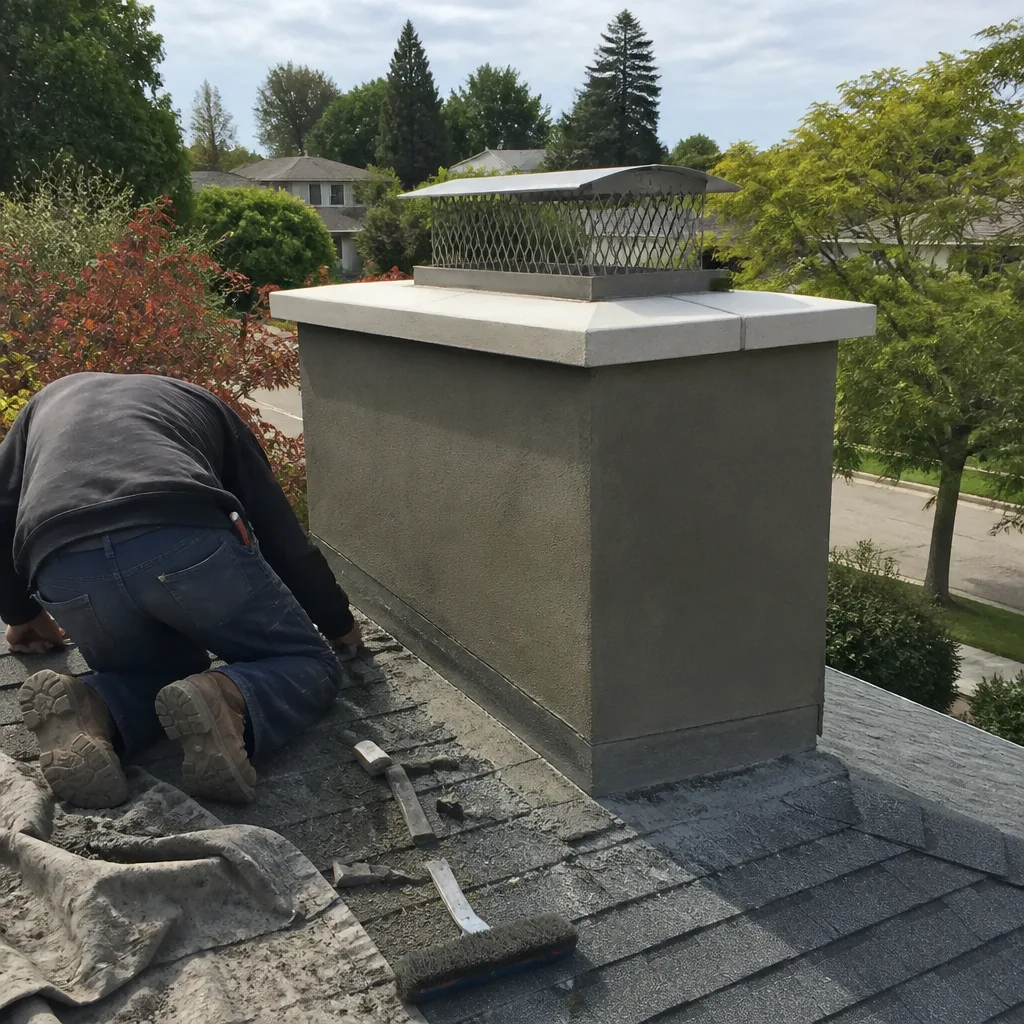
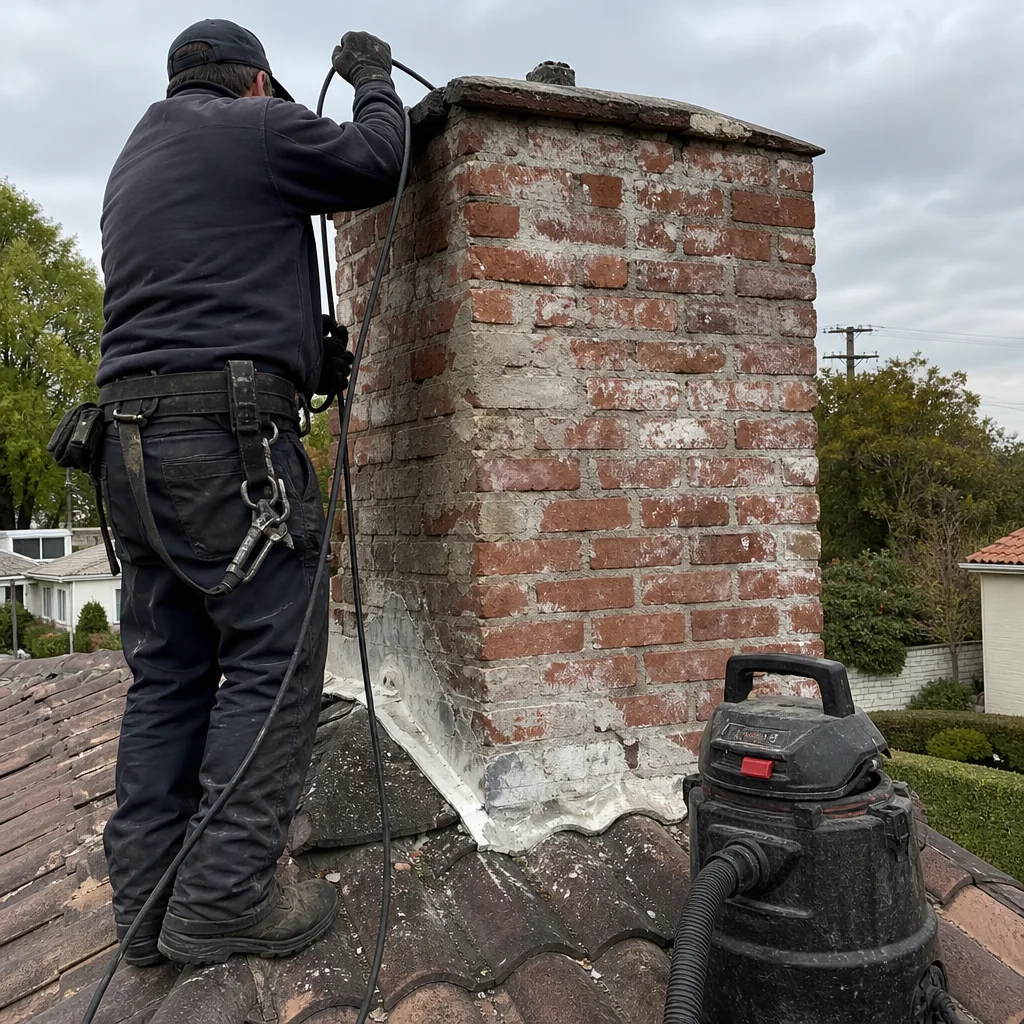
See the difference
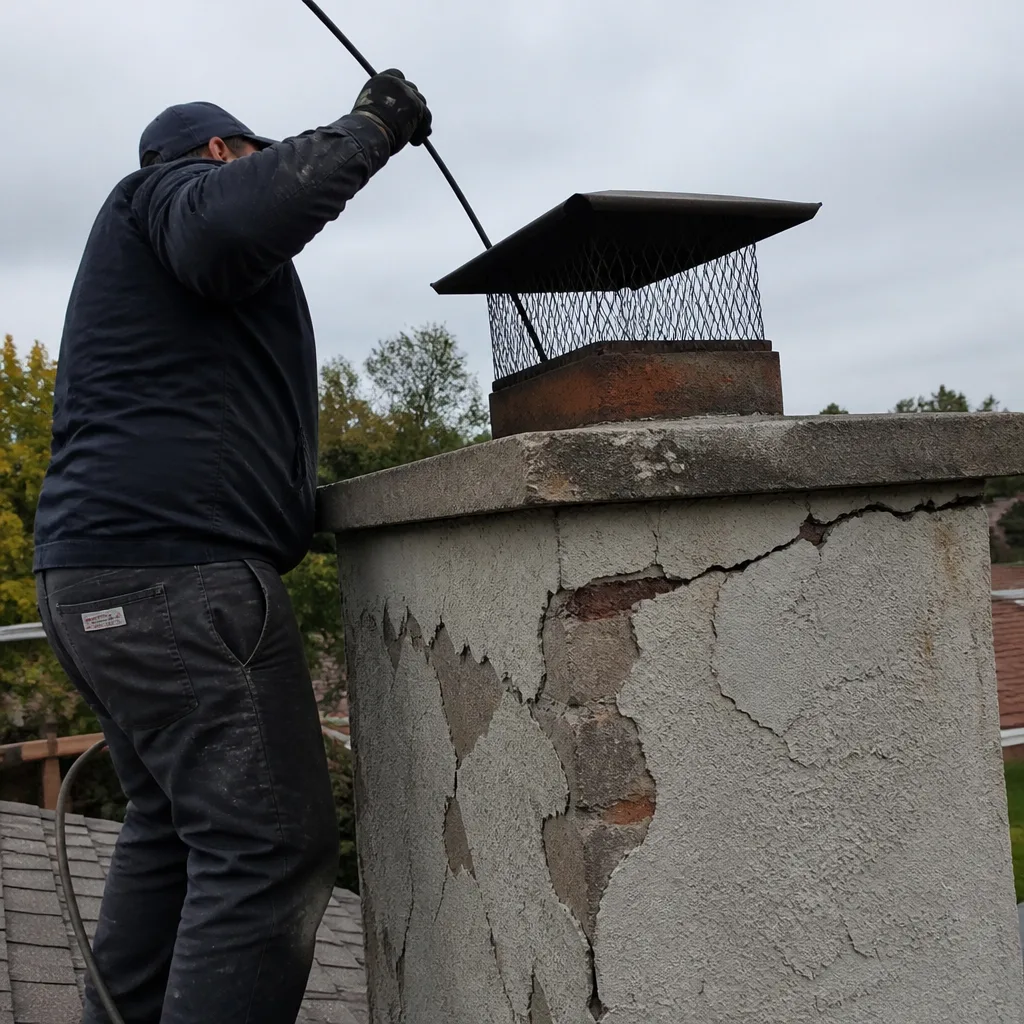 Before
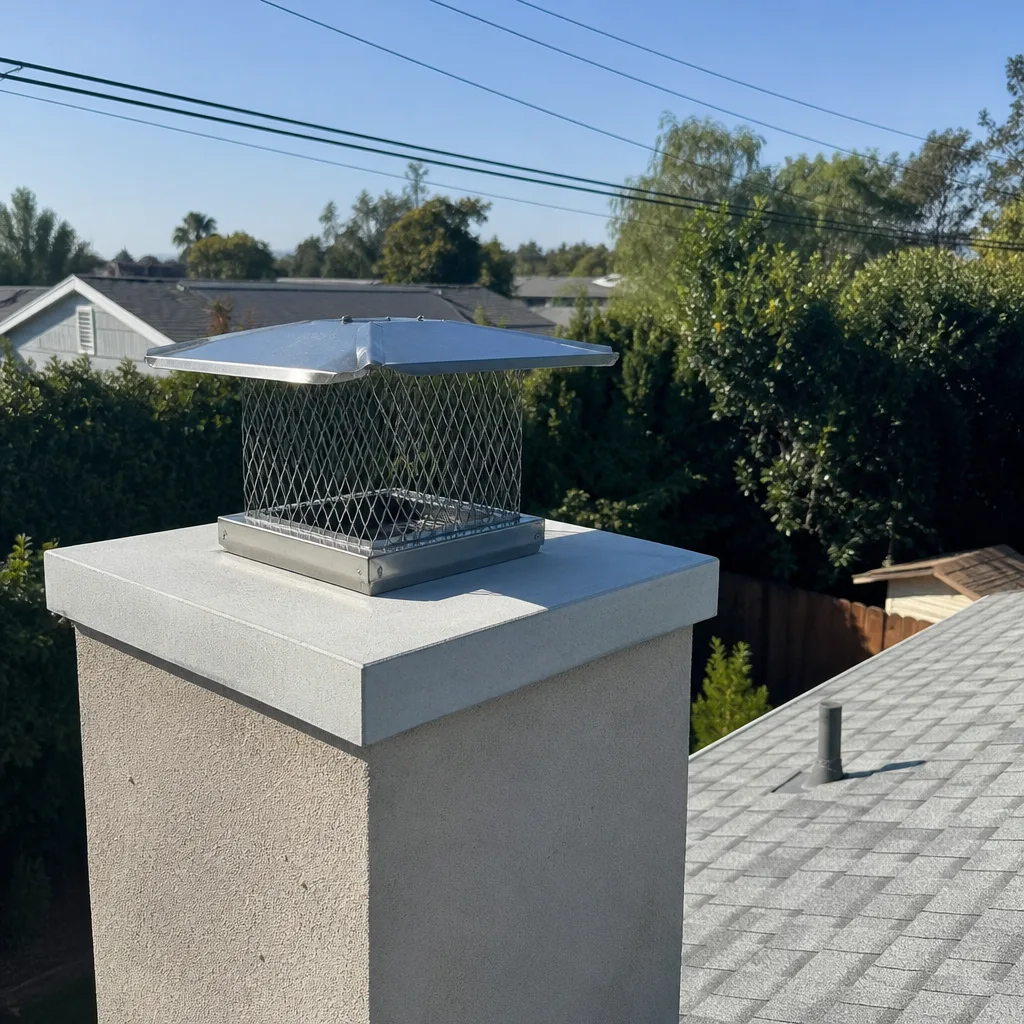 After
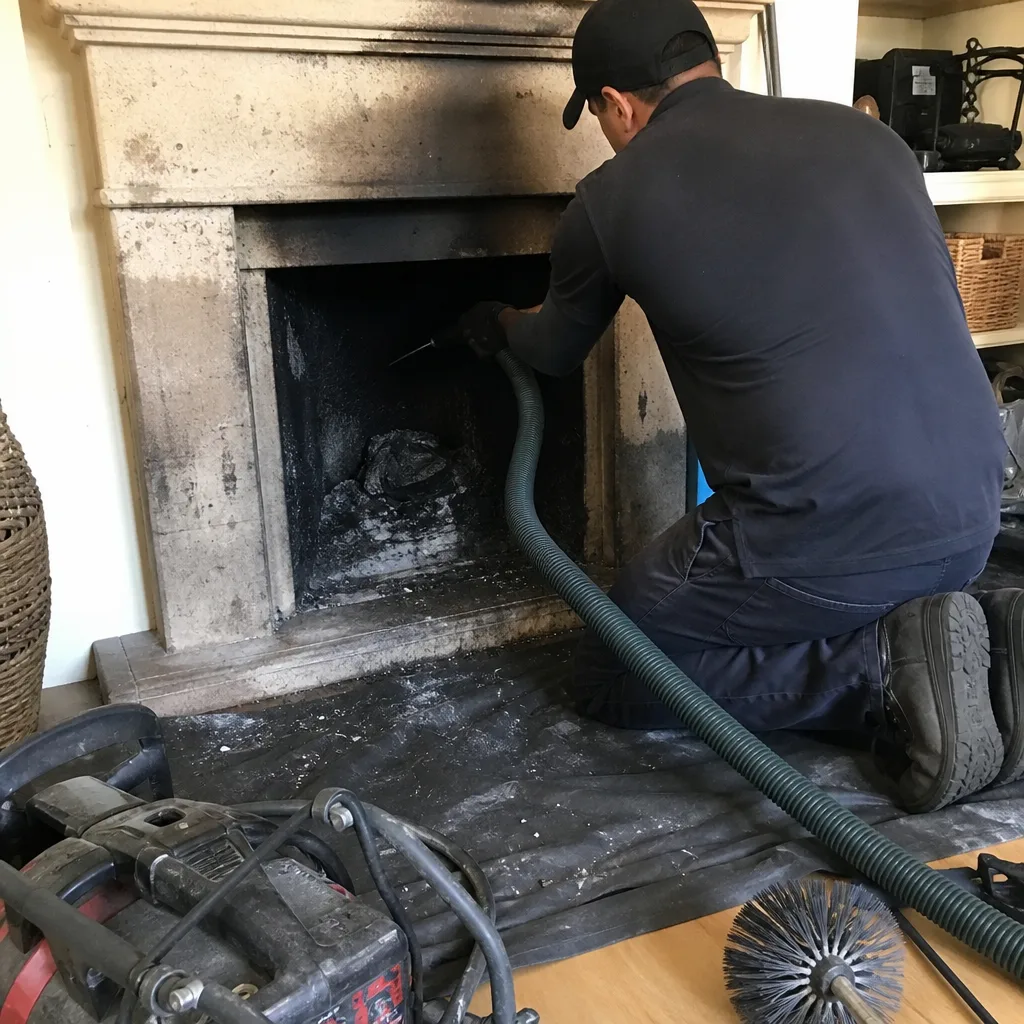 Before
 After
 Before
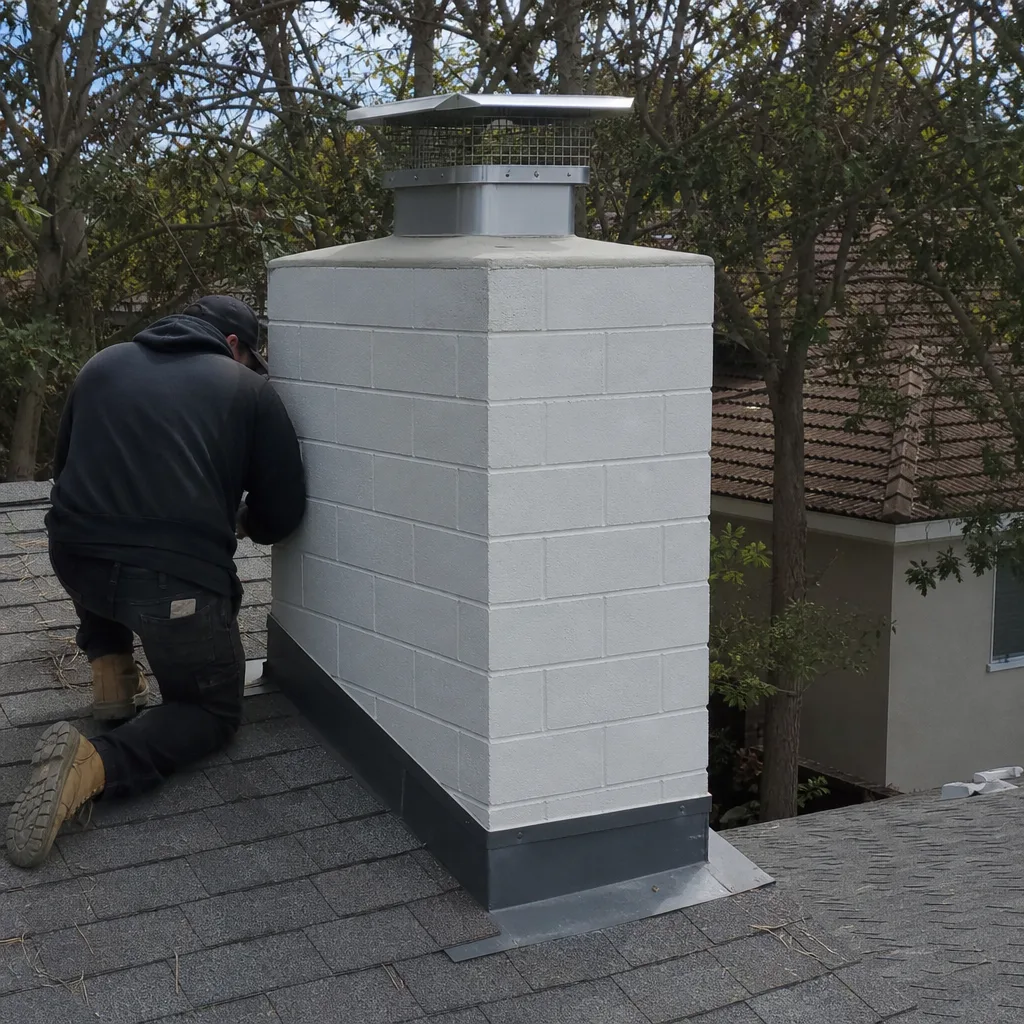 After
When to Call a Professional
Call for an inspection if you see black staining around the firebox opening, hear animal activity inside the flue, smell creosote on hot days with no fire burning, or see moisture stains on walls or ceilings near the chimney. Also call if the fireplace has not been inspected in the past two years, even if no symptoms are present. A clean system doesn’t advertise its condition, and the absence of warning signs is not the same as confirmation of safety.
Chimney Sweep Rancho Park offers free estimates in Rancho Park. Call (877) 326-6276 and tell us what you’re seeing, smelling, or hearing. The details you’ve noticed will help us bring the right tools and parts for the diagnosis.
Frequently Asked Questions
The National Fire Protection Association recommends an annual inspection, with sweeping performed as needed based on the inspection findings. In practice, homeowners who burn fires regularly through a winter season typically need a sweep every year. Homes that burn exclusively gas fireplaces can go longer between sweeps, but should still get an annual inspection because animal intrusion, cap failure, and liner deterioration happen regardless of fuel type.
Professional chimney sweeping in Rancho Park typically costs between $180 and $340 depending on the system type, level of creosote buildup, and whether repairs are identified during the inspection. The condition of the flue and the accessibility of the roofline affect the final price. Call (877) 326-6276 for an exact quote. Estimates are free.
Creosote has a strong, acrid smell that most people describe as similar to asphalt, tar, or an old barbecue grill that hasn’t been cleaned. The smell becomes more pronounced in warm weather because heat causes creosote deposits to vaporize. If you notice the smell when no fire is burning, the deposits inside the flue are heavy enough to warrant inspection.
Chimney sweeping requires specialized brushes sized to the flue, proper access equipment for roof work, and knowledge of what the removed material indicates about the system’s condition. The safety-critical nature of the work, combined with the fact that a professional sweep includes a camera inspection that catches structural problems a homeowner can’t see, means most homeowners are better served by hiring a professional. If you’re comparing providers, our guide on Choosing the Right Chimney Cleaning Brand: A Buyer’s Guide for Rancho Park covers what to look for. If you choose to attempt it, you need flue-specific brushes, a respirator rated for creosote particulates, and someone working with you for roof safety.
This is the number one concern we hear from Rancho Park homeowners, and we’ve built our inspection process around answering it honestly. Nothing gets recommended without camera evidence you can see for yourself. A cracked, spalled, or deteriorating clay liner shows up clearly on camera, and we’ll show you exactly what we see. If the liner is intact and only needs cleaning, that’s what we recommend. When we do recommend a DuraFlex reline or HeatShield resurfacing, you’ll understand why from the video before you agree to anything. Work can safely wait in some cases, and we’ll say so plainly when that’s true.
Cold exterior temperatures should improve chimney draft, because the temperature difference between the flue and the outside air is greater. If your fireplace smokes more when it’s cold, the likely cause is house pressure imbalance created by a heating system that’s running. As the furnace pulls air for combustion and the home tightens against the cold, negative pressure builds and competes with the chimney for available air. A professional can diagnose whether the fix involves a makeup air supply, a chimney height adjustment, or both.
The Bottom Line
Chimney warning signs are not random. White staining means water, black staining means draft failure, brown staining means deeper water intrusion, and creosote odor on hot days means deposits inside the flue that need to come out. Sounds point to animals, thermal movement, or structural damage, and a five-minute flashlight check from the firebox reveals most problems before they become emergencies. In Rancho Park, where wet winters and hot summers accelerate masonry deterioration, the annual inspection isn’t a formality. It’s how you confirm the system is safe before the burn season, and how you catch problems while they’re still component-level fixes instead of full rebuilds. If you’ve noticed any of the signs in this guide, call (877) 326-6276 for a free estimate. Tell us what you’re seeing, and we’ll bring the right tools and the right parts to diagnose it properly.
Written by the team at Chimney Sweep Rancho Park, serving Rancho Park since 2011.