
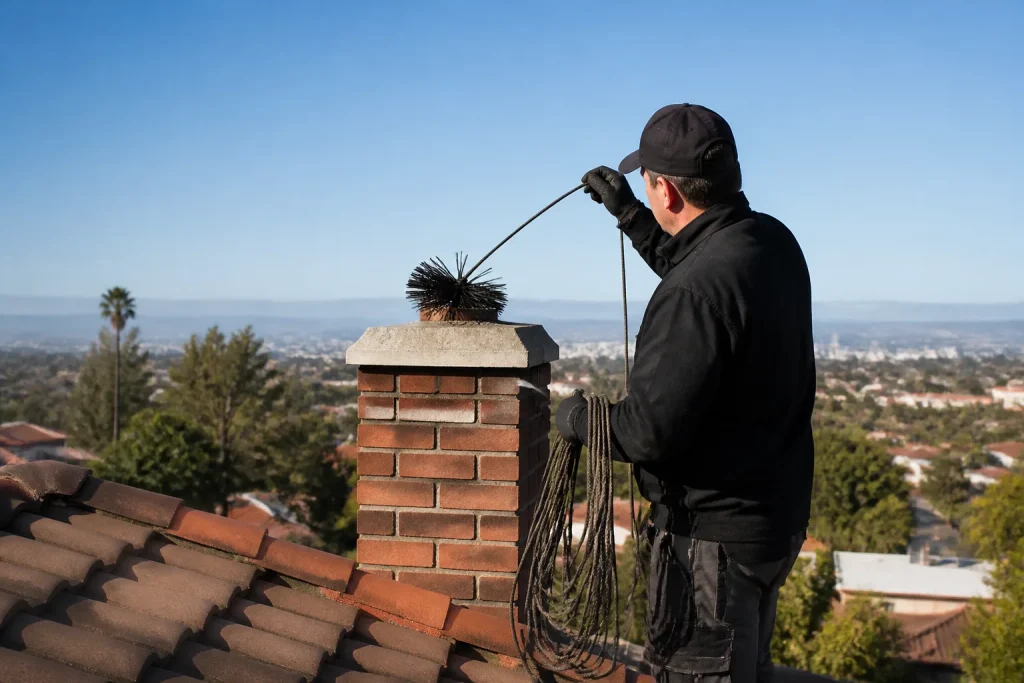
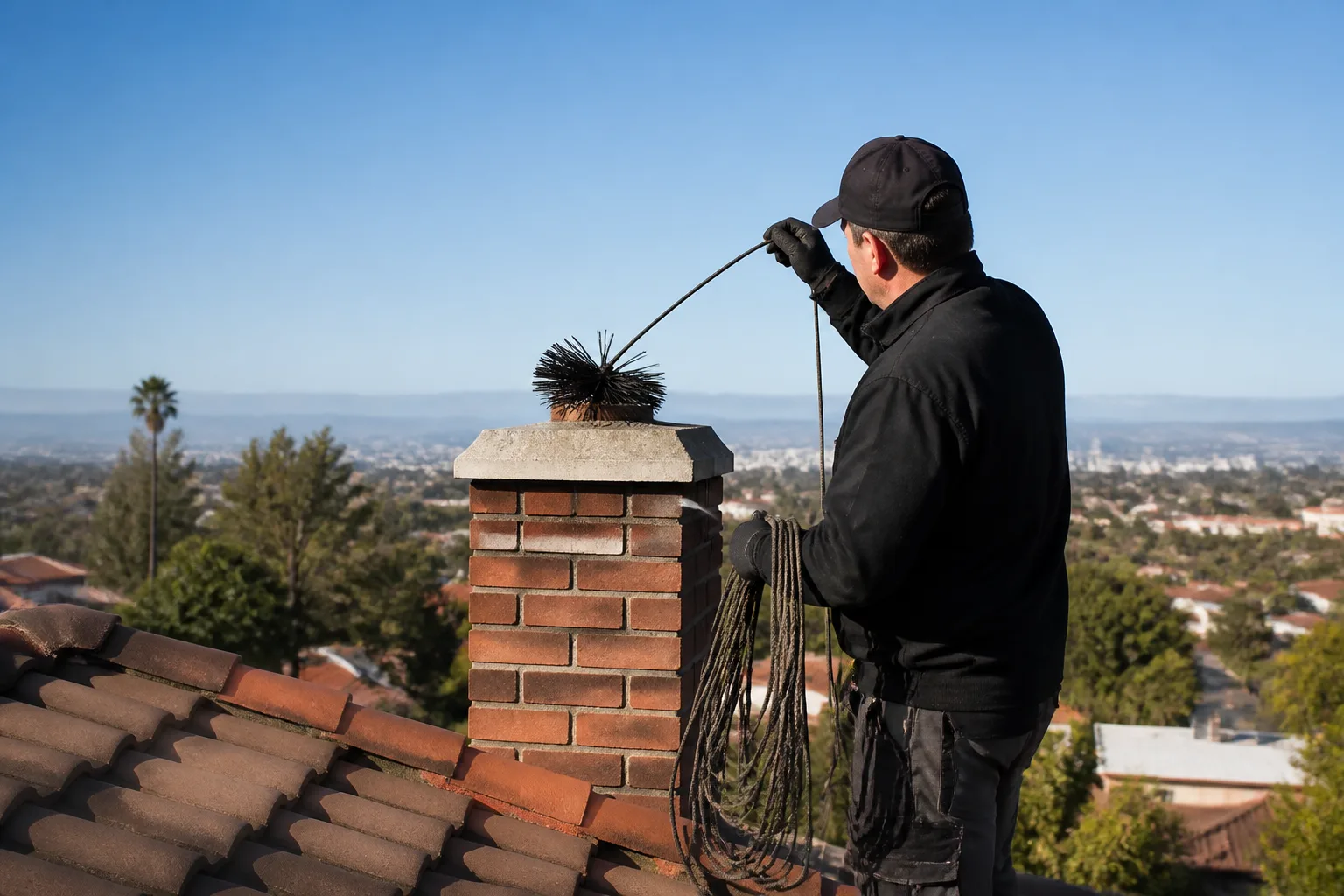
How to Choose the Right Chimney Cleaning Company in Rancho Park
Choosing a chimney cleaning company in Rancho Park comes down to asking questions that most homeowners never think to ask. The right company will answer them without hesitation: what liner alloy grades they stock, how they classify creosote, and which NFPA standard shapes their inspection reports. If a sweep stumbles on those, you’ve learned something useful before anyone sets foot on your roof. If you’d rather skip the interview process entirely, call Chimney Sweep Rancho Park home at (877) 326-6276 and we’ll walk you through what we do and why.
Here’s the uncomfortable reality most articles won’t tell you: CSIA certification is the minimum baseline, not a quality signal. A sweep can pass the CSIA exam and still have never installed a DuraFlex liner, applied HeatShield Cerfractory Sealant, or correctly sized a flue to NFPA 211 Table A requirements. In Rancho Park, where homes range from 1940s bungalows with original masonry to 1980s remodels with prefab fireplaces, that distinction matters more than the certificate on the van.
Key Takeaways
- Ask five specific technical questions before booking any chimney company in Rancho Park.
- A legitimate inspection report lists component-by-component condition ratings, not a single “passed” line.
- Material sourcing separates professional chimney contractors from general handymen with a sweep brush.
- Verify licensing, liability coverage, and workers’ comp in under five minutes using public databases.
- Door-to-door sweeps and coupon-bait inspections in Rancho Park are patterns worth avoiding.
The Five Questions That Filter Out Unqualified Chimney Companies
Here’s the technical interview, and it works whether you’re calling about a Chimney Sweep in Rancho Park or a full liner replacement. These questions don’t require you to be an expert. They require the person on the other end of the phone to be one.
- “What liner alloy grades do you stock?” A real chimney contractor can tell you the difference between 316L and 304 stainless, and when each is appropriate for a gas versus wood-burning appliance. A handyman with a brush says, “We can order whatever you need.” We stock DuraFlex liner systems because they’re specification-grade products used by professional chimney contractors nationwide, and because the alloy grading is never a guess.
- “How do you classify creosote stage?” Creosote isn’t just “some buildup.” First-degree is dusty soot. Second-degree is flaky and granular. Third-degree is a hardened, tar-like glaze that no standard brush removes properly. If the company can’t describe the difference and what tools each stage requires, they’re not doing real inspections.
- “Which NFPA standard governs your inspection reports?” The answer is NFPA 211, the standard for chimneys, fireplaces, and venting systems. A company that hesitates here has not built a reporting process around an actual engineering framework. In Rancho Park, where chimneys can be 70-plus years old, that framework is not optional.
- “Do you carry HeatShield or an equivalent ceramic flue repair system?” HeatShield is the ceramic resurfacing product designed specifically to restore damaged chimney flues without a full rebuild. A company that’s never heard of it simply doesn’t do repair work beyond sweeping, which means you’ll need a second contractor the moment your inspection finds real damage.
- “Can you show me your report format before you arrive?” This is the fastest filter. A one-page “passed or failed” form protects the contractor, not you. A real report lists condition by component: flue liner, crown, cap, damper, firebox, smoke chamber, exterior masonry. Each line gets a rating, a note, and when relevant, a code reference.
We pulled a sweep report out of a garage over in Cheviot Hills last fall where the previous company had written “chimney fine” on an invoice and charged $89. The flue had a six-foot vertical crack. That’s what a vague report gets you.
What a Legitimate Chimney Inspection Report Looks Like
You should never accept a chimney inspection that doesn’t read like a punch list. The report we provide after a Rancho Park inspection breaks the system down into components, and each component gets its own line item. If the flue liner shows spalling or separation, the report says so, with photos. If the crown is cracked but not yet failed, the report says that too, and notes whether it can wait or needs attention before burn season.
A useful report includes three things every homeowner in Rancho Park should recognize:
- Condition ratings by component: Not “good” or “bad,” but specific observations. “Third-degree creosote present in upper flue” means something. “Minor crown cracking, 1/8 inch or less” means something different.
- Code references: When a gap or clearance issue exists, a real report cites the relevant NFPA 211 or IRC section. That’s not showing off. That’s giving you the information your insurance company or a future buyer might ask for.
- Photo documentation: Before and after photos, and photos of anything flagged. If the company doesn’t use a camera during inspection, you’re relying on their memory and their word.
We use camera inspection on every sweep, not just repairs. It’s the difference between telling you the flue is clean and showing you the flue is clean. That matters when the Chimney Repair in Rancho Park conversation comes up, because you should never be asked to approve a repair without seeing the evidence for it.
Why Material Sourcing Separates Real Contractors from Generalists
Here’s a Rancho Park-specific truth: any handyman can buy a brush from a big-box store and call themselves a chimney cleaner. What they can’t do is source Copperfield components, DuraFlex liner systems, or Olympia Chimney parts from specialty distributors, because those distributors only sell to established chimney contractors with accounts and trade references.
That supply-chain distinction shows up in the work. When a liner replacement calls for a specific alloy and diameter, settling for “whatever fits from the hardware store” is exactly how you end up with a flue that corrodes in five years instead of twenty. We work with Copperfield and DuraFlex because the engineering tolerances are documented, the alloys are graded, and the warranty support actually exists. The same goes for HeatShield. It’s a ceramic resurfacing system that restores damaged flues without demolition, and it’s only available to trained installers. Your local handyman isn’t going to have HeatShield on the truck.
This also applies to dryer venting. Famco and Gelco build termination caps and airflow components engineered for specific vent configurations. It sounds like minutiae until you realize that a poorly vented dryer is one of the leading causes of residential structure fires. We treat Dryer Vent Cleaning in Rancho Park with the same material discipline as a chimney liner job, because both are exhaust systems that can fail dangerously.
How to Verify a Chimney Company in Five Minutes
Before anyone goes up on your roof in Rancho Park, you should know three things: the company’s California contractor license is current, their liability coverage exists, and their workers’ compensation policy is active. Here’s the five-minute verification process:
- Check the license: Go to the California Contractors State License Board website. Search the company name or license number. The database shows license status, classification, and any disciplinary actions. A chimney contractor should hold a C-29 or relevant specialty classification, not just a general business license.
- Ask for a certificate of insurance: Any legitimate company can email a current certificate from their carrier showing general liability coverage. Call the carrier’s verification line if you want certainty. Thirty seconds of phone time is worth it when someone is working on your roof.
- Confirm workers’ comp: In California, contractors with employees are required to carry workers’ compensation insurance. The CSLB database notes this. If a company has no employees and no workers’ comp, that’s technically possible for solo operators, but it means no one else is covered if a helper gets hurt on your property.
Do this before you sign anything. A company that balks at any of those three checks is telling you something, and it’s not something you want to learn after an accident.
Rancho Park Red Flags: What to Watch For
Every city has patterns, and Rancho Park is no exception. We’ve heard from enough homeowners to recognize the same stories repeating:
- Door-to-door sweep solicitations: Legitimate chimney companies in Rancho Park don’t knock on doors. If someone rings your bell offering a $49 inspection because they’re “in the neighborhood,” the playbook is familiar: find damage, quote a repair thousands above market, and pressure a same-day decision. Professional chimney work is planned, not impulse-bought.
- Coupon-bait inspections: The $59 or $79 sweep coupon is a loss leader designed to get a body on your roof. The inspection that follows will almost always find “urgent” repairs. Some repairs are real. Many are not. The giveaway is when the company can’t show you photographic evidence of the damage they’re claiming.
- The in-attic “chimney fire damage” claim: This one is nasty. A sweep goes into your attic (which you can’t easily access), comes down, and reports fire damage to the chimney structure, often quoting a five-figure repair. If there’s no borescope video, no written report, and no offer to show you the damage yourself, get a second opinion before spending a dollar. Real damage is documentable.
When to call a pro: if you’ve had a chimney fire, if you smell smoke when the fireplace isn’t in use, if you notice white staining on the exterior masonry (efflorescence signals moisture intrusion), or if your dryer takes twice as long to dry clothes as it used to. Those are indicators that something has changed, and none of them fix themselves.
Related services in Rancho Park: we handle chimney sweeping, structural repair and liner work, and dryer vent cleaning under one roof, so you never have to coordinate multiple contractors when an inspection turns up more than one issue.
The Bottom Line
Choosing a chimney company in Rancho Park isn’t about finding the cheapest quote or the longest list of credentials. It’s about finding someone who can answer specific technical questions, show you a real inspection report, and prove they source materials from the right places. Ask about liner alloys. Ask about creosote classification. Ask about NFPA 211. The company that answers well is the company worth hiring.
If you’re in Rancho Park and want to skip the guessing, Chimney Sweep Rancho Park offers free estimates. Call (877) 326-6276 and we’ll walk you through exactly what we inspect, what we look for, and what you’re paying for. No vague reports, no scare-selling, no repairs recommended without camera evidence you can see for yourself.
Frequently Asked Questions
A standard chimney sweep in Rancho Park typically runs between $180 and $320, depending on the fireplace type and the amount of creosote present. Third-degree creosote removal costs more because it requires specialized tools and chemicals, not just a brush. Call (877) 326-6276 for an exact quote based on your setup. Estimates are free.
The NFPA 211 standard recommends an annual inspection and cleaning as needed. If you burn wood regularly during the winter months, once a year before burn season is the baseline. Gas fireplaces can often go two years between cleanings, but the venting should still be inspected annually because birds and debris in Rancho Park chimneys are a year-round problem.
You need a new liner if the existing one is cracked, corroded, or improperly sized for your appliance. A legitimate company will show you camera footage of the damage and explain what’s causing it. If a contractor recommends a liner replacement without photographic evidence or a written report, get a second opinion. We never recommend liner work without showing you the camera images first.
Creosote accumulates with every wood fire. If enough builds up, a hot fire can ignite it, causing a chimney fire that reaches temperatures of 2,000 degrees Fahrenheit. That’s enough to crack flue tiles, warp metal liners, and spread fire to the surrounding structure. In milder cases, creosote restricts airflow, causing smoke to back up into the home and carbon monoxide to accumulate. Call (877) 326-6276 to schedule an inspection before burn season.
Written by the team at Chimney Sweep Rancho Park, serving Rancho Park since 2011.
Need Chimney Cleaning Help?
Call Chimney Sweep Rancho Park - licensed & insured, with free written estimates in Rancho Park.
(877) 326-6276