
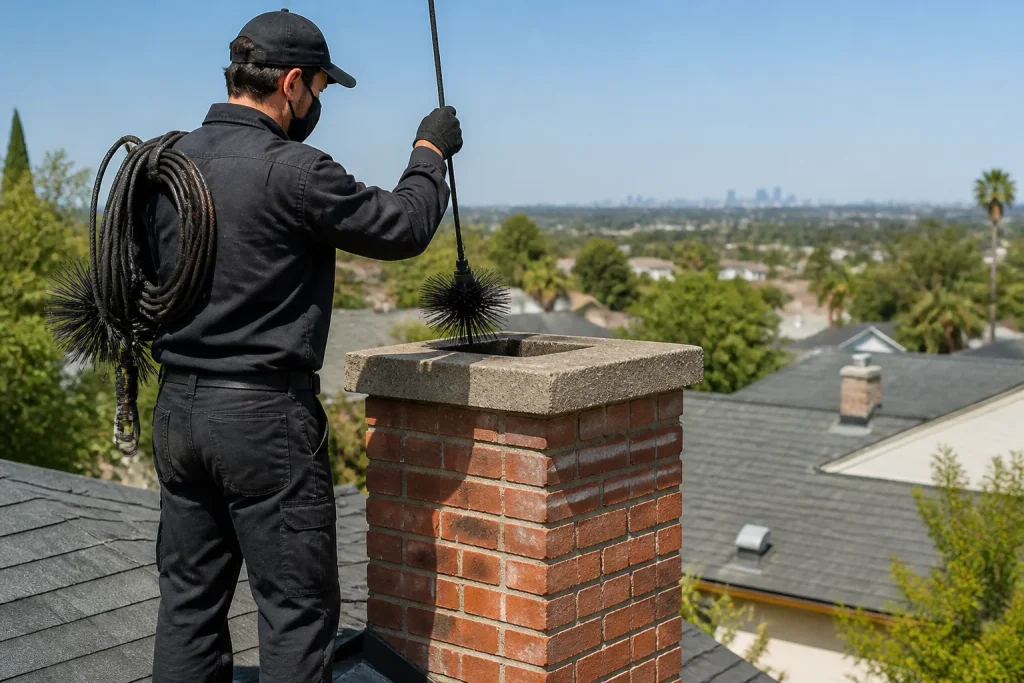
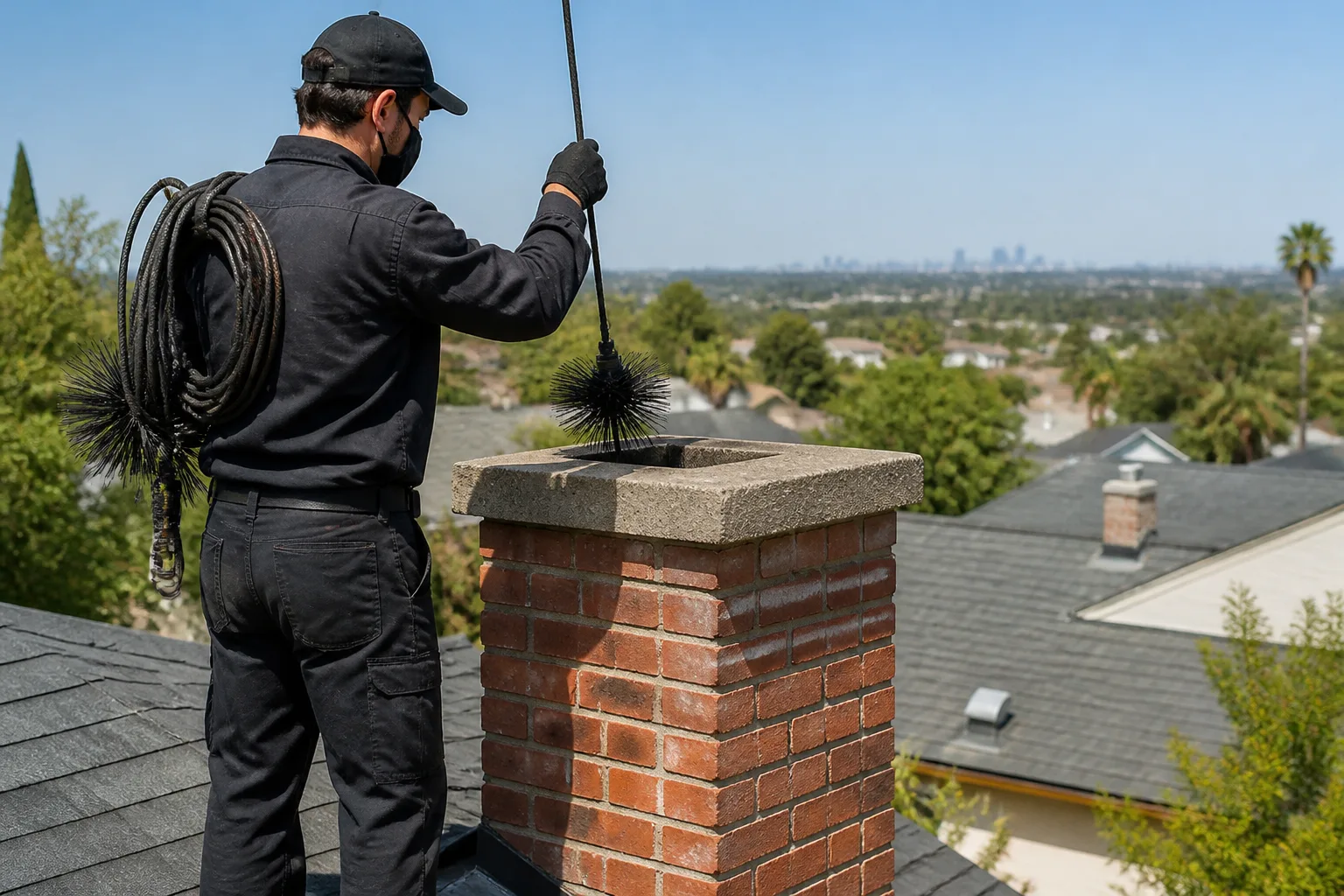
DuraFlex Chimney Sweep in Rancho Park: A Homeowner’s Guide
DuraFlex is a specification-grade stainless steel chimney liner system built for wood, gas, and oil appliances. In Rancho Park, where we regularly reline Craftsman-era clay tile flues and 1960s brick stacks, the choice between a DuraFlex 316Ti liner and a generic flex liner can mean the difference between a 25-year installation and one that fails in seven. If you’d rather not sort through liner grades yourself, call (877) 326-6276 and we’ll walk you through it.
Here’s the problem most homeowners don’t know they have. Two chimney liner quotes can look identical on paper: same diameter, same “stainless steel flex liner” description, same rough price range. But one might be 304-grade imported steel and the other DuraFlex 316Ti. Under NFPA 211, only one of those belongs in a gas appliance application. The other corrodes from condensate, pinholes within a decade, and vents combustion gases into the wall cavity. We’ve pulled failed liners out of Rancho Park chimneys that were installed less than eight years prior, and the homeowners had no idea until a sweep found the perforations.
Key Takeaways
- DuraFlex is an alloy-grade decision, not a brand preference. The difference between 304, 316, and 316Ti steel determines whether your liner survives gas condensate, wood-burning temperatures, or oil exhaust acidity.
- Liner diameter is not optional. An undersized liner causes the exact creosote buildup you hire sweeps to remove.
- A complete liner system includes more than the flex tube. Top plate, rain cap, and connector at the appliance end are all part of a code-compliant installation.
- Rancho Park’s housing stock has specific relining needs. 1920s Craftsman chimneys and 1960s brick stacks fail in predictable ways.
- Cheaper liner substitutions are a real thing. We’ll show you how to spot them before you sign a contract.
What DuraFlex Actually Is: Alloy Grades and Why They Matter
DuraFlex is a flexible stainless steel chimney liner manufactured for professional installation in existing masonry flues. What separates it from hardware-store flex pipe is the metallurgy. DuraFlex is produced in multiple alloy grades: 304, 316, and 316Ti. Each exists for a specific appliance type, and installing the wrong one is not a minor mistake.
304 alloy is the entry point. It handles wood-burning temperatures but has limited resistance to acidic condensate. In a gas fireplace or gas furnace venting through a masonry chimney, exhaust gases cool as they rise. The moisture in those gases condenses, forms a mild acid, and eats through 304 steel over time. We see it in Rancho Park homes with converted wood fireplaces: the original firebox gets a gas insert, the liner gets swapped to the cheapest stainless available, and eight years later the liner is riddled with corrosion.
316 alloy adds molybdenum, which significantly improves acid resistance. It’s the standard recommendation for gas appliances. Then there’s 316Ti: the same corrosion resistance as 316 but with titanium added for stability at high temperatures. That matters for wood-burning fireplaces and stoves, where liner temperatures can spike far beyond what a gas system ever produces. For mixed-use fireplaces, the kind where a homeowner burns wood five months of the year and runs gas logs another three, 316Ti is the specification we recommend. It’s what Chimney Sweep Rancho Park home installations default to for wood-burning applications.
The practical takeaway: ask your contractor which alloy grade they’re quoting, not just “stainless steel liner.” If they can’t answer, they’re likely quoting whatever the supply house sent on the truck.
Liner Diameter and BTU Matching: The Part Nobody Explains
Chimney liner diameter isn’t a preference. It’s calculated from the appliance’s BTU output and the height of the flue. Get it wrong, and two things happen. An oversized liner lets exhaust gases linger too long, cool, and deposit creosote. An undersized liner restricts flow, forcing smoke back into the home and causing rapid, heavy creosote accumulation on the liner walls. Half the time we’re called for a chimney sweep in Rancho Park, the real problem is a liner that was sized wrong at installation, not a homeowner who neglected maintenance.
Here’s a real example. A Chimney Sweep in Rancho Park call took us to a 1960s home near Cheviot Hills, where the homeowner complained about a wood stove that smoked whenever the outside temperature dropped below 50 degrees. The liner looked fine on camera. But it was a 6-inch flex liner on a stove rated for 8-inch venting. The draft never had a chance. We replaced it with a properly sized DuraFlex 316Ti liner, matched the connector at the appliance end, and the smoke problem disappeared the first time they lit a fire. The old liner wasn’t defective. It was just wrong for the application, and nobody had done the math.
This is why we treat liner sizing as part of the sweep process, not a separate upgrade conversation. When we inspect a chimneys in Rancho Park, we’re checking liner diameter against appliance BTU input, not just looking for creosote thickness. A clean flue that’s the wrong size is still a dangerous flue.
What a Complete DuraFlex Installation Looks Like
A liner isn’t just a tube dropped down a chimney. A proper DuraFlex system has three integration points, and cut-rate installations skip or cheap out on all of them.
- The top plate and rain cap. The top plate seals the chimney crown and carries the weight of the liner. The rain cap prevents water intrusion while allowing exhaust to vent. Cheap installations use thin gauge top plates that warp within a few seasons, pulling the seal loose and letting water pour down the outside of the liner.
- The connector at the appliance end. This is the transition from the flex liner to the appliance flue collar. It must be sized correctly and secured with the right hardware. A loose connector is how exhaust gases leak into the chase or the room, not up the chimney.
- The insulation wrap (where required). On exterior chimneys, which is most of what we see in Rancho Park, the liner needs insulation to maintain exhaust gas temperature. Without it, gases cool too fast, condensation forms, and you’re back to the corrosion problem we described with 304 alloy.
We source our top plates, rain caps, and connectors from Copperfield and Olympia Chimney, two professional supply names most homeowners never hear about. The reason we do it comes down to tolerances. A rain cap from a home center is built to a price point. A rain cap from Olympia is built to a specification. They cost more, and they fit properly for the life of the system.
When a contractor quotes you a liner, ask what’s included at the top and bottom. If the bid says “liner” and nothing else, assume you’re paying for a liner-only drop and will be charged extra for every component that makes the system actually work.
Red Flags in Liner Bids: How to Spot a Substitution
We see this from the receiving end. A homeowner calls for a Chimney Repair in Rancho Park estimate, shows us a competitor’s bid, and the details don’t add up. Here are the red flags we tell every homeowner to look for.
- The bid says “stainless steel flex liner” with no alloy designation. 304, 316, and 316Ti are all stainless steel. The words alone don’t tell you what you’re buying. If the alloy grade isn’t listed, ask for it in writing. If the contractor won’t commit, walk.
- The liner is quoted by length only, not diameter or wall thickness. A 25-foot liner in the wrong diameter is still a 25-foot liner on paper. Diameter determines whether the system drafts or not.
- The top plate and connector are listed as “included” without brand or gauge. There’s a world of difference between a 24-gauge top plate and a 16-gauge one. Cheaper plates warp. Warped plates leak.
- The contractor can’t name the liner manufacturer. If the person quoting your chimney work doesn’t know whether they’re installing DuraFlex, Forever Flex, or whatever the local supplier happened to stock, they’re not treating the liner as an engineered component. They’re treating it as a commodity.
- The bid doesn’t mention the appliance at all. Liner spec depends on appliance type and BTU. A bid that doesn’t reference your fireplace, stove, or furnace was written without looking at the job.
In our experience, bids that fail these checks come from generalist contractors who install a few liners a year. They buy what the supply house recommends, not what the application requires. The price looks competitive until the liner fails early and you’re paying for a second installation.
Rancho Park Chimney Configurations: Why Relining Is So Common Here
Rancho Park’s housing stock breaks into two rough categories, and both have liner problems for different reasons.
The Craftsman-era homes, built mostly between 1920 and 1940, have original clay tile flues. The tiles crack from decades of thermal cycling. Mortar joints fail. What’s left is a flue that leaks combustion gases into the wall cavity for years before anyone notices. A camera inspection shows the problem immediately: hairline cracks running the length of the tiles, missing mortar, chunks of clay tile blocking the flue at the bends. These chimneys are prime candidates for a DuraFlex reline, not because the liner brand is flashy, but because the alternative, rebuilding the masonry flue from scratch, costs three to five times more and takes weeks.
The 1960s brick stacks are a different failure mode. The brickwork on these chimneys tends to be sound, but the clay liners are undersized by modern standards. A fireplace built in 1965 with a clay flue rated for a wood fire is now venting a modern gas insert with completely different draft requirements. The liner doesn’t fail structurally. It just works poorly, causing drafting problems and condensation that would not exist with a properly sized stainless liner.
We also see a bracket of mid-century homes in Rancho Park where the chimney was originally built for a furnace, then the furnace was replaced with a high-efficiency unit vented through a wall outlet, leaving the old flue to handle only a fireplace or wood stove. Those flues often need to be downsized to draft properly, and flex liners make that possible without demolition.
When to Call a Pro
If you’re reading this and your chimney was built before 1980, you probably have clay tile liners that have never been inspected with a camera. That’s the threshold where we start finding problems: cracks, failed mortar joints, and liner sizing mismatches against modern appliance specs. A professional inspection with a video camera settles the question in under an hour.
You should also call before installing any new appliance, before converting a wood fireplace to gas, or if you’ve noticed smoke smells in the house, water staining around the chimney chase, or an appliance that drafts poorly on cold days. These are not aesthetic issues. They’re indicators that combustion gases are not leaving the home the way they’re supposed to.
If you’re in Rancho Park and need liner work or an inspection, Chimney Sweep in Rancho Park covers the full scope: sweep, structural repair, and liner installation. Related services include Dryer Vent Cleaning in Rancho Park, which we treat as part of the same combustion-safety picture. A house with a clean chimney and a clogged dryer vent still has an exhaust problem.
The Bottom Line
DuraFlex isn’t a brand most Rancho Park homeowners will ever need to think about, but it’s a name your chimney professional should be able to explain by name. The difference between a DuraFlex 316Ti liner and a generic stainless flex liner is the difference between an installation that outlasts your mortgage and one that fails inside of a decade. The liner has to match the appliance, the diameter has to match the BTU load, and the top plate, rain cap, and connector all have to be built to spec, not grabbed off a shelf.
If you’re evaluating chimney liner bids in Rancho Park, ask for the alloy grade, the diameter calculation, and the brand of the top plate and connector. If the contractor hesitates on any of those, you have your answer. If you’d rather not run the gauntlet of liner grades and bid red flags alone, call us at (877) 326-6276 for a free estimate. We’ll put a camera down your flue, show you what’s there, and tell you honestly whether a reline is necessary or whether your clay tiles have another decade in them. No scare tactics, no manufactured urgency. Just the condition of your chimney and what it actually needs.
Frequently Asked Questions
DuraFlex is a flexible stainless steel chimney liner system manufactured in multiple alloy grades, including 304, 316, and 316Ti. It’s designed for professional installation in existing masonry chimneys to restore proper drafting and contain combustion gases. The alloy grade determines what type of appliance it’s suited for. 316Ti is rated for wood-burning applications, while 316 offers the corrosion resistance needed for gas appliances. If your chimney professional can’t name the liner brand and alloy grade, they’re not specifying materials. Call (877) 326-6276 for a liner evaluation in Rancho Park.
In the Rancho Park area, a professionally installed DuraFlex liner system typically runs between $2,800 and $5,500, depending on flue height, diameter, alloy grade, and the condition of the existing chimney. The alloy grade matters for price: 316Ti costs more than 304, and a proper installation includes the top plate, rain cap, and connector, not just the flex tube. Cheaper quotes usually mean 304 alloy, thinner top plates, or missing components. Call (877) 326-6276 for an exact quote after a camera inspection, which is free with our estimates.
A correctly specified DuraFlex 316Ti liner installed with proper components typically lasts 20 to 25 years or longer. The failure mode is almost always corrosion from condensate or incorrect alloy selection, not mechanical wear. A 304 liner on a gas appliance can pinhole within 7 to 10 years. The lifespan hinges on whether the liner alloy matches the appliance type and whether the installation includes proper sealing at the top plate and connector. If you’re uncertain what’s currently installed in your Rancho Park chimney, call (877) 326-6276 for a camera inspection.
This depends on the company. Many chimney sweeps only clean and inspect, then refer liner work to a masonry contractor. Chimney Sweep Rancho Park does both: we sweep, we inspect with cameras, and we install DuraFlex liner systems in the same visit if relining is needed. We don’t subcontract liner work out. The advantage is that the person who sizes and installs the liner is the same person who will sweep it in future seasons, which means the installation is done with maintenance access in mind. Call (877) 326-6276 to schedule a sweep and liner evaluation in one visit.
Written by the team at Chimney Sweep Rancho Park, serving Rancho Park since 2011.
Need Chimney Cleaning Help?
Call Chimney Sweep Rancho Park - licensed & insured, with free written estimates in Rancho Park.
(877) 326-6276